
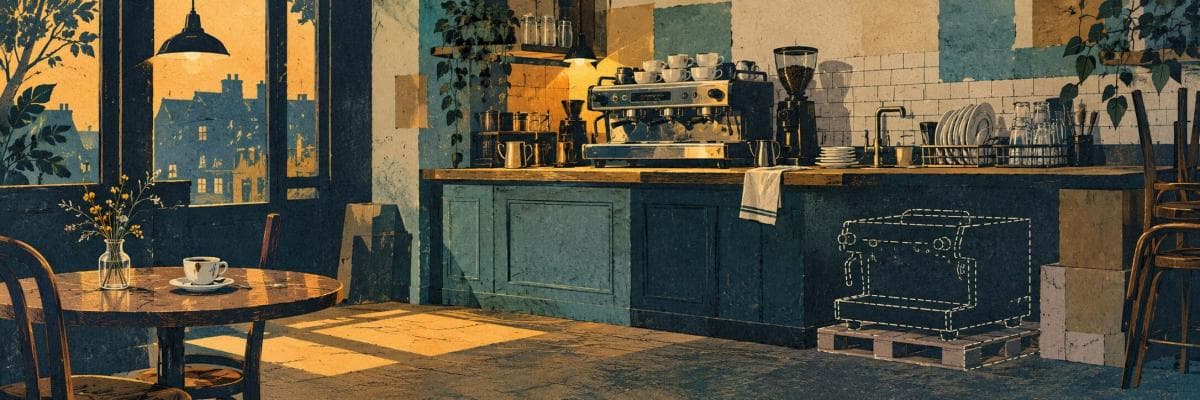
At six, as the first customers of the restaurant’s final evening took the last free table, the espresso machine began to cough.
“It’s the steam valve,” said Leon, who had washed dishes there for eleven years and was still on shift for the final service.
Mara reached for the switch. “It’s the machine.”
“That’s one way of putting it.”
The new owner had brought a replacement in a crate that morning. It was silver, narrow and so quiet it seemed embarrassed to be seen. The old machine was green enamel, chipped at the corners, and possessed the sort of confidence that came from having survived three renovations and a change of name.
Mara put her hand on the switch. She had owned the place for three weeks, long enough to learn the till and the names of the suppliers, not long enough to know which noises meant stop. The dinner rush had not yet reached the door. She wanted the new machine fitted before the queue formed, and the delivery crew had offered to take the old one away tonight.
Leon put his hand on the counter, not hers. “Let it finish the cycle.”
The machine shuddered. A line of water trembled in the cup under the group head. Leon watched the gauge, then lifted the little lever halfway. The cough stopped. The machine let out a long, pleased hiss.
“You knew it would do that?”
“I knew it might.”
“That’s a very useful kind of knowing.”
He smiled as if she had returned something he thought he had lost. “It’s the only kind I’ve got.”
Mara had spent the day making lists of things to keep and things to replace. The machine had gone in the second column. The green paint looked tired; the steam wand was stiff; one foot had been shimmed with a folded piece of card. She had not written down that Leon could hear when the pressure was wrong.
He took a cloth from his pocket and wiped the drip tray. “Your new one will be easier.”
“That’s the idea.”
“Easier for who?”
She looked at the crate. “For everyone.”
Leon rinsed the cloth. “That’s usually how it starts.”
“You think I’m changing everything,” she said.
“I think you’ve got a new machine in a box.”
“That’s not an answer.”
“It’s the one I’ve got while I’m washing these.” He lifted a cup from the suds and checked its rim. “This one’s chipped.”
She took it from him. The chip was no bigger than a seed. She put it in the crate marked DONATE, then looked at the replacement machine. Its polished panels reflected the occupied tables without showing any of the scratches in them.
The machine cooled around them. Outside, a bus dragged its brakes at the corner. Mara began to count the cups left on the shelf, then stopped at seven because counting them did not make them more useful.
“Show me the valve,” she said.
Leon set the cloth down. He showed her the pressure, the small delay in the lever, the point where the wand needed to be turned back a fraction or it would spit. His hands moved with the economy of someone who had repeated a task enough times to stop asking it for permission.
She tried. The first hiss was too loud.
“You’re gripping it like it owes you money.”
She laughed. “It might.”
On the second try, the wand gave a clean ribbon of steam. The sound rose and held. For a moment the busy café seemed to be listening with them.
Leon moved the last cups from the sink to the rack. Mara asked him to leave the machine on. He did, but he stayed by the sink, hands in the water, as if the request had not yet earned an answer.
She pulled the crate away from the counter and set a clean towel beside the machine. “You wash up. I’ll do the close.”
“You don’t know where everything goes.”
“Then tell me.”
He showed her which shelf held the teaspoons and where the cloths dried without smelling of soap. When she reached for the bin, he shook his head and took it himself. She wiped the steam wand twice, then waited for him to check it.
When the last customer left, Leon carried the cup from the table back to the sink.
Mara put the replacement machine's delivery note on the counter. “Before we lock up, can you show me one more cycle?”
“My shift ends at seven.”
“I know.”
“And I’m not training the machine.”
“No. You’d be training me.”
He considered this. Then he took the delivery note and turned it over. On the blank side he wrote: turn the lever back a little before the cough.
“That’s not the whole lesson,” he said.
“Before we lock up, then.”
They shifted the crated machine away from the counter. Mara lifted one end; Leon took the other. The old one remained on the counter, green and scarred and still warm. Leon went back to the sink. Mara turned the CLOSED sign to face the room, then took the last clean cup from the rack and set it between them. “Show me the cough again,” she said. He set down the cloth, and together they listened for it.


No published comments yet.