
Why write this
This began with the Letters Live Dear Me competition, announced in The Times. The invitation was simple: write a letter to your younger self. That form created a useful distance. It made it possible to speak to the person I was before I had the language to explain why I was always reading the room, adjusting myself and doubting the right to say what I thought.
The competition context matters, but this article is not a submission. The letter was a starting point. I wanted to keep asking what happens when self-protection becomes self-surveillance, when having an opinion feels dangerous, and when a person mistakes harshness for honesty. The answer is not to become noisier or more certain than you are. It is to allow yourself a mind of your own, then remain open to changing it.
The letter
Dear younger me,
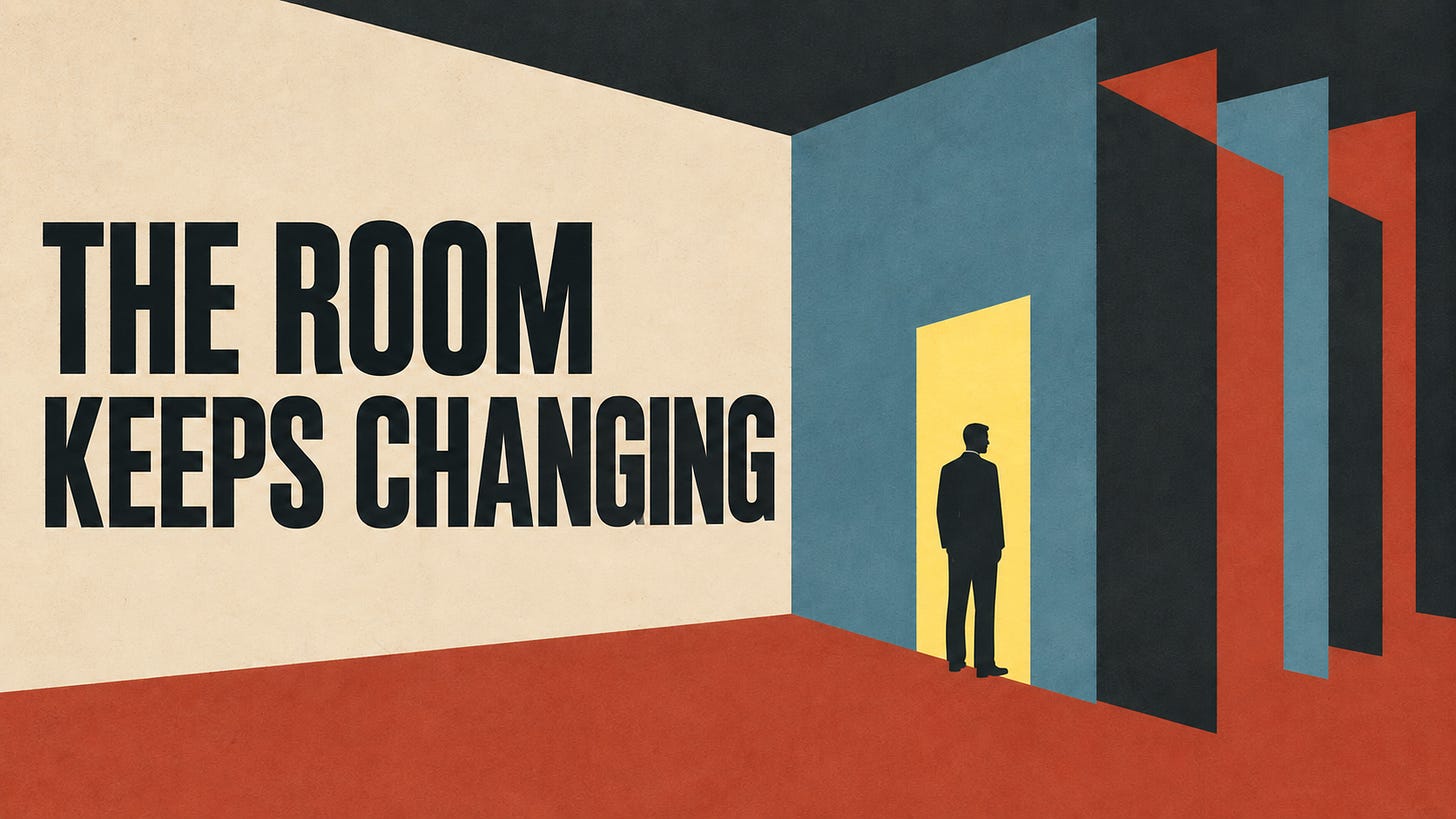
The rooms kept changing. The voice that judged you came too, learning each room’s rules.
You learned to notice what people welcomed and how to find your place. Perhaps every new group came with the same small hope: that this time, you could arrive without first working out which version of yourself would be welcome. I imagine you could leave a conversation and carry it home with you, turning it over long after everyone else had moved on. Was that stupid? Did I say too much? Were they laughing with me? You might be welcomed and still wonder whether anyone really knew you.
Even a pause could bring the questions back. You might notice it correctly and still get its meaning wrong. Watching so closely cost you ease, but it also left you alert to what goes unsaid and who hasn’t been heard. I won’t call the hurt worthwhile. You can keep that attention without staying on guard.
Perhaps you sometimes made yourself the joke before anyone else could. Maybe it felt safer to get there first. You could laugh with them and still carry the words home. I wish I could have sat beside you and asked whether the cruelest thing you believed was also the truest. You might not have believed me if I had simply said you were wonderful.
Knowing you got something wrong isn’t the same as deciding there is something wrong with you. You can learn from an awkward answer without letting it stand for your whole character. You may have mistaken harshness for honesty. Sometimes the voice was simply wrong about you.
I won’t tell you simply to love yourself. You might have turned that into one more thing to get wrong. If you’ve hurt someone, try to put it right. Being cruel to yourself afterwards won’t repair it for them. You don’t have to replace every cruel thought with praise you can’t yet believe. When someone is kind, let yourself take it in. You don’t have to decide at once whether you can trust them. Give it time, and watch what they do next.
I doubt the voice will disappear. I hope, over time, it stops getting the last word. Maybe you say what you think before rehearsing every reason to take it back. If someone gives you a better reason, you can change your mind without regretting that you spoke. You’ll still get things wrong. Put them right, then try to let the mistake end there.
Keep your wit. Keep noticing. But don’t turn either against yourself. You can enter a room without solving it first, and leave a silence without filling it with blame.
With love,
Me
After the letter
I’m not sure the voice ever disappears completely. Perhaps the work is less dramatic than silencing it: noticing when it is speaking, asking whether it is telling the truth and deciding not to let it make every choice.
You are allowed to have an opinion before you have perfected it. You are allowed to change your mind when you learn more. You are allowed to enter the room without solving it first.
That feels like a reasonable place to begin.



No published comments yet.