
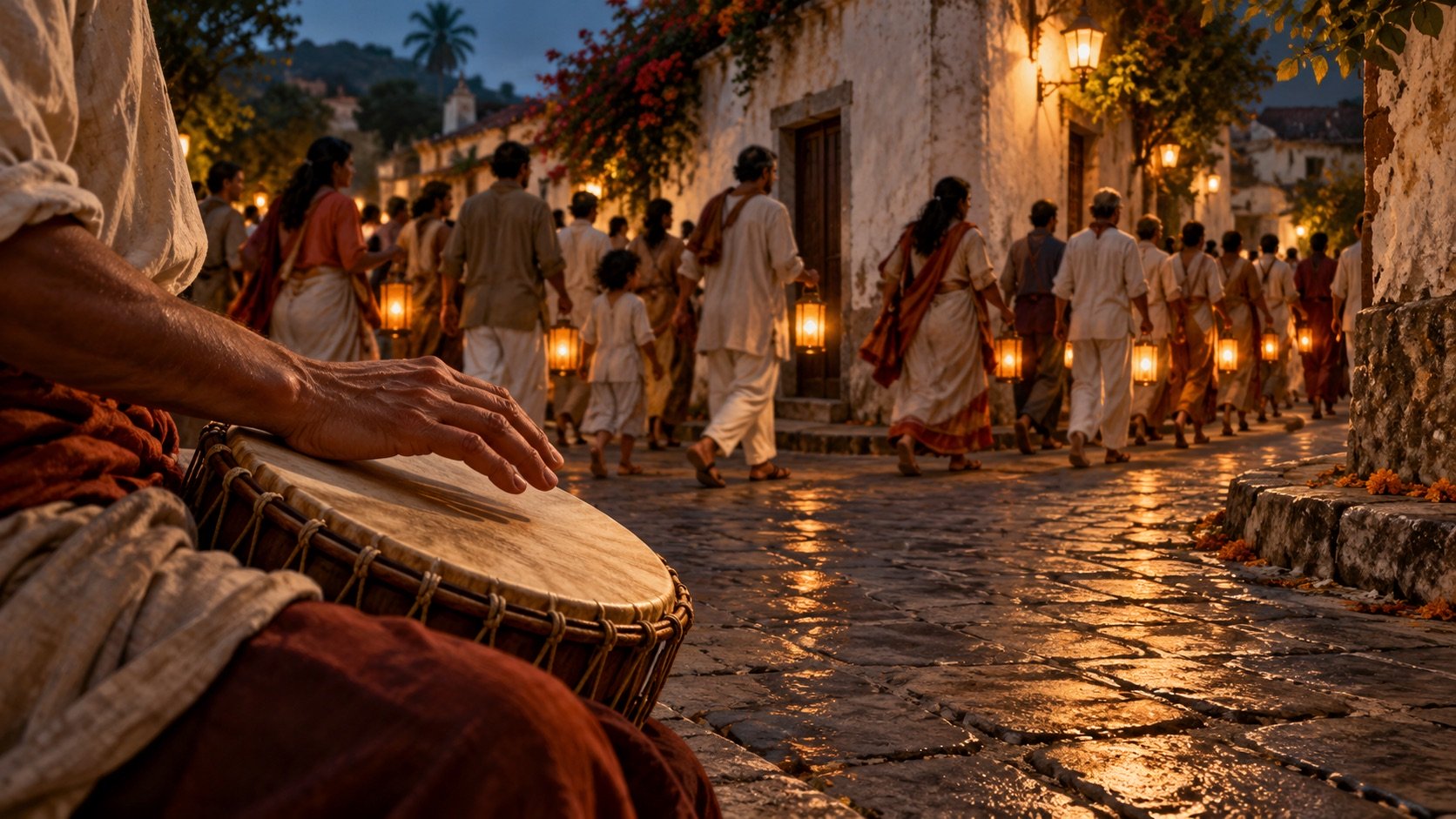
The new arrangement had a blank bar where the drums should have been.
“Photocopier,” Mr Maseko said, tapping the score with his pencil. “We’ll keep the pulse going.”
Anathi looked at the empty stave. She had been given the bass drum because her shoulders were broad enough for the strap and she could keep time without watching her hands. The band’s procession was on Saturday. She wanted the opening beat, the one that made people turn their heads before they saw the uniforms.
“We’ll put a roll there,” Mr Maseko said. “Anathi?”
She nodded. The drum rested against her hip. Its skin had a pale scuff near the rim where someone had struck it with a buckle. She held the sticks ready.
They started again. Brass rose through the hall, bright enough to make the windows vibrate. At the blank bar, Anathi rolled both sticks across the drum. The sound filled the gap neatly. The dancers at the far end of the room kept their steps, but when they turned, their shoes scraped out of time.
“Again,” said Mr Maseko.
The dancers tried once more. Their leader, Lindi, took the corner wide and nearly clipped the row of plastic chairs. She lifted a hand to stop them.
“The roll comes over the heel,” she said. “We can’t hear the floor.”
Mr Maseko looked at the score. “The bar is missing.”
“It’s there,” said Lindi. “Just quiet.”
Nobody laughed. Anathi looked down at her sticks. The empty stave did not have a rest printed on it, only the thin black lines and a grey smudge where the photocopy had dragged. She had thought the blank was a mistake too. Now she could hear the sound the roll covered: shoes turning, a small catch of breath, the brush of a sleeve against a shoulder.
“We can’t lose the beat,” Mr Maseko said. “People will be walking behind us.”
“They’ll see us,” Lindi said. “We turn at the gate. The drums don’t need to tell us where our feet are.”
Mr Maseko asked them to take it from the start. Anathi let the procession build: trumpet, trombone, the answering high line, the low brass under all of it. She felt the bass drum’s vibration through the strap and counted four. At the blank bar, she raised both sticks and did not bring them down.
The dancers’ shoes scuffed the floor. Someone’s bracelet clicked against a wrist. Lindi planted her heel and turned the line around the corner without touching a chair.
The band stumbled into the next phrase. Anathi came in half a beat late. Mr Maseko stopped them.
“You dropped it,” he said.
“I kept it in my hands.” She tapped the sticks together once, softly. “The turn has its own count.”
Lindi walked the corner again, slower this time. Anathi watched her heel land. The dancers crossed the gap, their shoulders turning one after another like doors easing open. The trumpet player began the next phrase as the last pair cleared the chairs.
Mr Maseko bent over the score. “If we take the roll out, the band will rush.”
“Then we practise the rest,” Anathi said.
He studied her, then the dancers, then the bar of pale paper. He drew a small mark above the stave: TRY THE REST OUTSIDE.
They took the music to the street. The turn at the gate was tighter than the one in the hall, and the pavement sloped towards the gutter. The first time through, Anathi held the silence and the dancers cleared the corner, but the brass came in early behind them. The second time, Mr Maseko signalled for the roll. Anathi struck it. The dancers rushed their turn and Lindi’s heel caught the kerb.
“Again,” Mr Maseko said.
Anathi raised the sticks. At the blank bar she kept them lifted. The dancers stepped around the corner, shoes rasping against the pavement. Their last pair cleared the gutter before the trumpets came in. Mr Maseko looked at the score, then folded it along the blank bar.
On Saturday the crowd made a wall of talking along the route. At the gate, Mr Maseko raised his hand for the roll. Anathi saw Lindi set her heel, and kept her sticks above the drum. The band’s next phrase waited a breath for the dancers to clear the turn. Then the brass opened over the street. Mr Maseko did not signal her again.

No published comments yet.