
Loading poetry
Poetry
A space for poems, spoken pieces, and collections shaped by pressure, memory, fracture, and feeling.
Poetry categories
Each stream gathers poems by mood, music, pressure, and the kind of attention the piece asks for.
Poems that walk the fault lines: grief, rupture, war, urban grit, and the mythic underbelly of the everyday. Expect charged images, stark music, and hard turns that don’t tidy the mess so much as name it.
Editor’s picks and special spotlights: the poems, sequences, and craft notes we think deserve your front-row gaze. Rotating highlights, seasonal themes, and one-off gems that show the range of our community.
Where verse meets melody. Poems arranged as songs, chants, and soundscapes—complete with audio players, lyric sheets, and credits for collaborators. Expect live takes, studio mixes, and experiments that let the poem sing in new registers.
Field notes of the inner and outer world: weather, seasons, land, and the quiet revolutions of thought. Lyrical attention, ecological awareness, and a contemplative pace define this stream.
Wit with teeth. Irony, parody, and mischief aimed at power, pretence, and the status quo. Formal play and punchy line breaks welcome; the laugh should leave a bruise.
Poems in which a single speaker thinks aloud under pressure. A live occasion, listener, silence or repeated phrase lets the voice turn through argument, memory or self-recognition; meaning emerges through the act of speaking.
Work of resilience and renewal: poems about survival, kinship, faith (in any form), and the long arc of becoming. Clear cadence, steady light, and endings that open rather than preach.
Dream-logic, fabulism, and mythic visitations. Reality bends, symbols speak, and images carry more than one meaning. The goal is wonder and unease in equal measure.
Poetry in isiZulu, alongside careful translations where offered. A home for imagery, izibongo (praise poetry), and contemporary voices that carry rhythm and story. Submissions may appear bilingual to welcome wider readers.
71 entries across poetry.
44 entries across poetry.
94 entries across poetry.
261 entries across poetry.
29 entries across poetry.
126 entries across poetry.
Poetry began here as play with words, fragments, and unlikely connections. Over time it became a record of feeling, then a way of making sense without forcing neat explanations too early.
Some pieces are more instinctive. Some are more controlled. None of them are interested in pretending the human experience arrives tidy.
These poems are not written to hand over a single fixed meaning. They are written to hold image, pressure, contradiction, and the parts of experience that resist summary.
Read them slowly or read them in a rush. Read them in sequence if you want to notice how the voice shifts over time. Read them out of order if you want the cleaner shock of recognition.
If a poem leaves you with a clearer feeling rather than a cleaner answer, it has done its job.
Some poems also live in voice.
Where a spoken version exists, it should feel like an extension of the page rather than a separate performance layer. The voice is there to carry the pressure of the line, not distract from it.
Collections gather poems by atmosphere, season, pressure, or recurring thread.
Enter a collection when you want a more sustained mood than the main archive offers, or when you want to stay with a particular register a little longer.
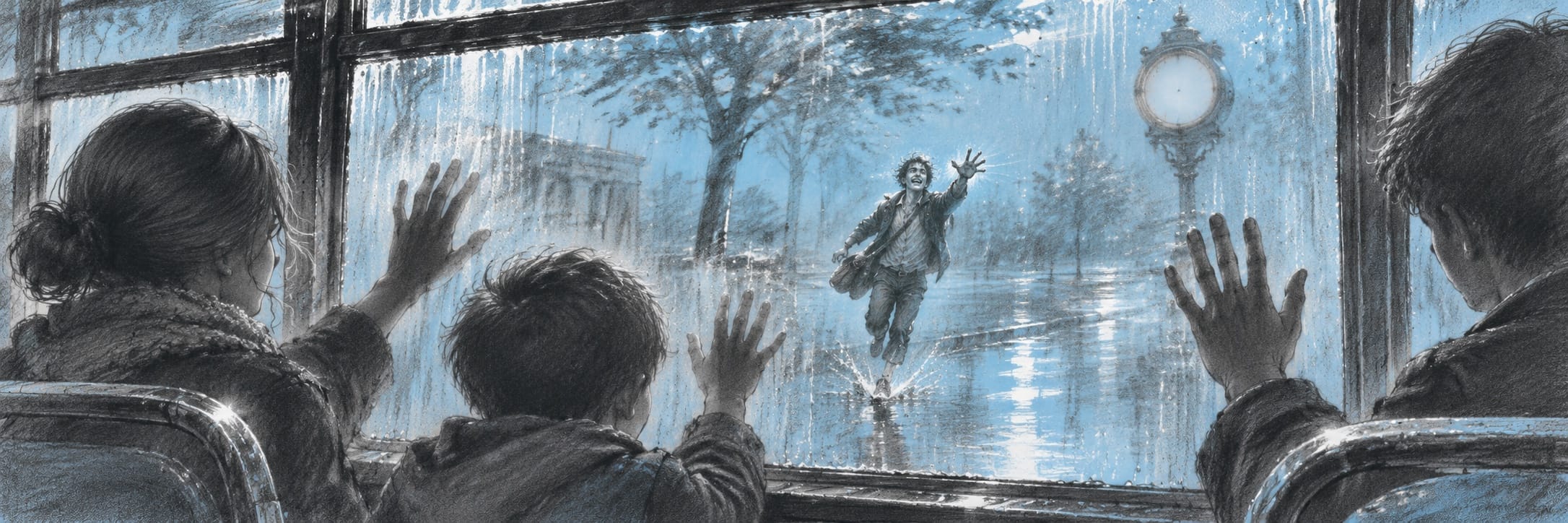
A station clock disagrees with the timetable; after catching the next bus, three passengers raise their hands to a runner, where the gesture can look like goodbye.
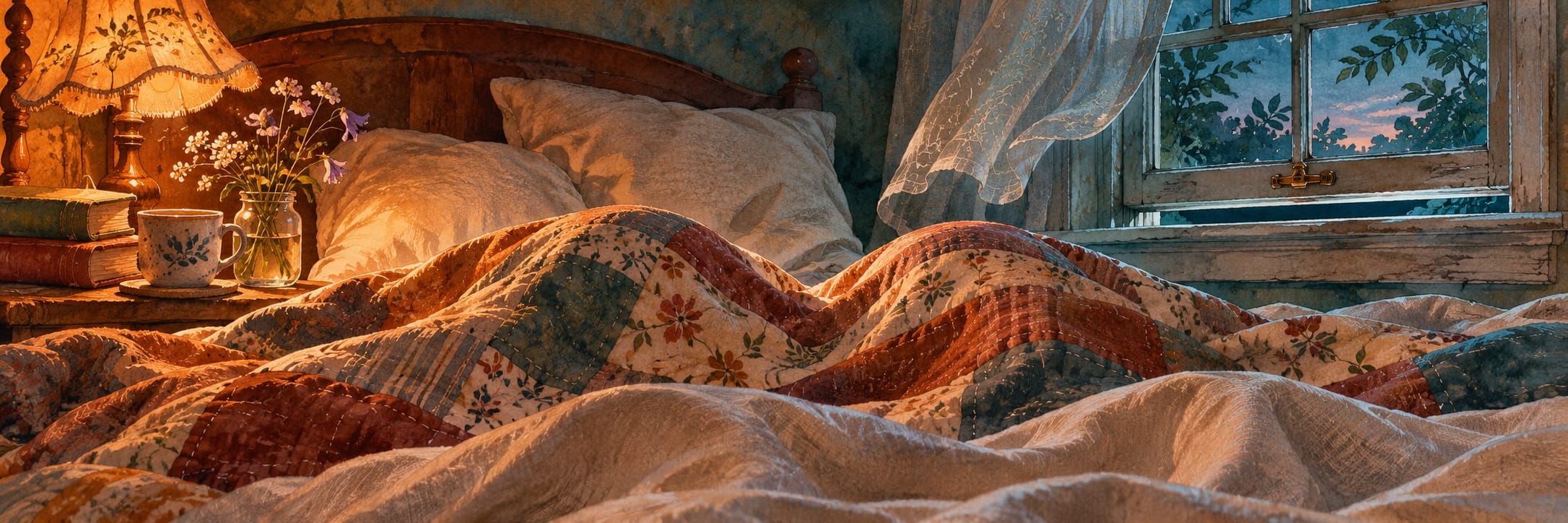
A dreaming lover wakes to a fart; a shared bedroom joke turns into warmth, sexual ease and a hand left under a breast.

Two cooks prepare garlic differently from the same recipe; a coin-shaped slice darkens, and each tends the other’s pan.
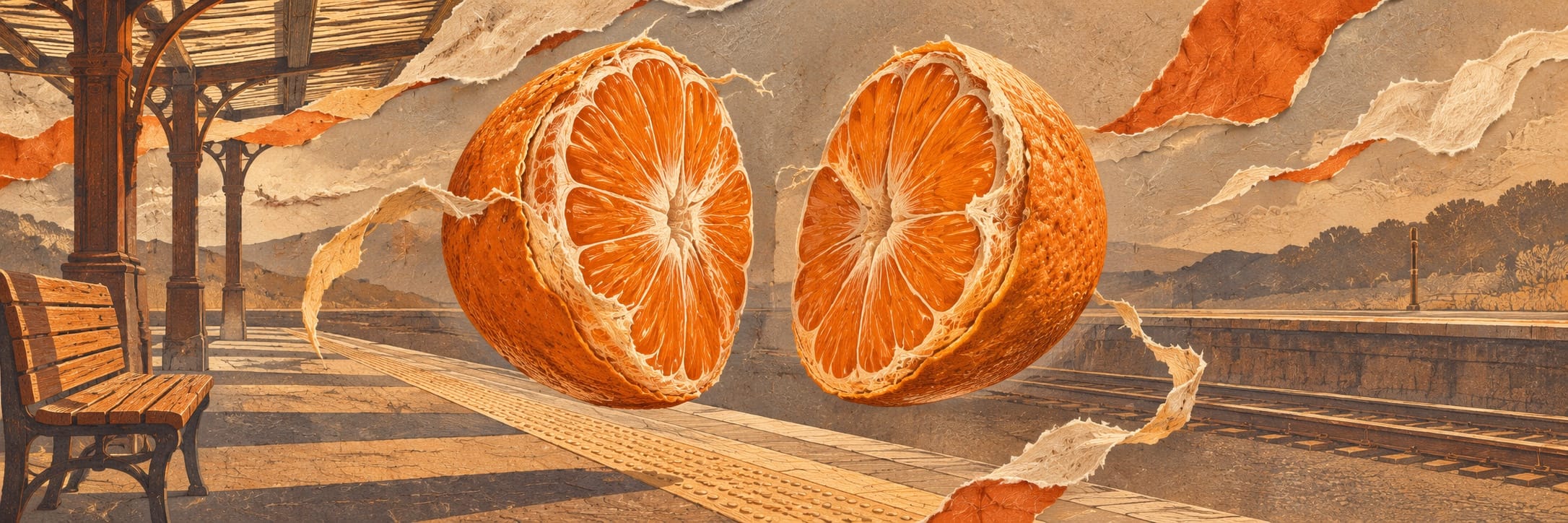
A thought-reader hears a woman replaying a safe combination, then asks a boy for a musical rest that becomes a public echo.
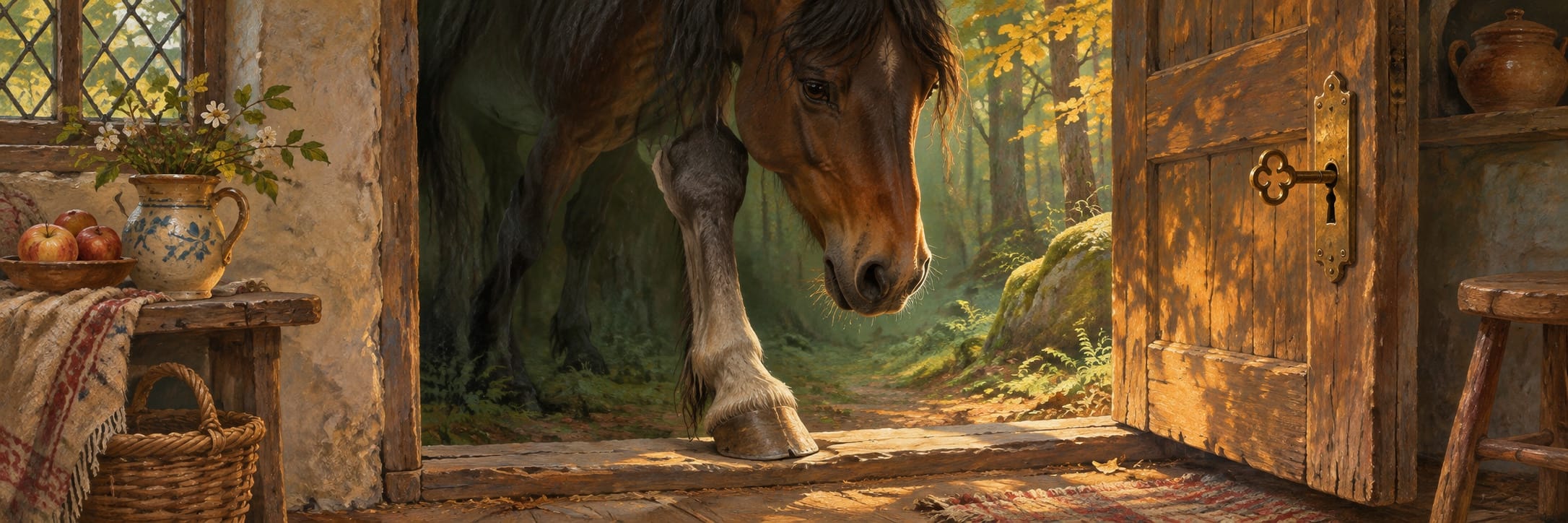
A fairy godfather's protective key brings an unexpected coach to the speaker's home, where a horse crosses the threshold.
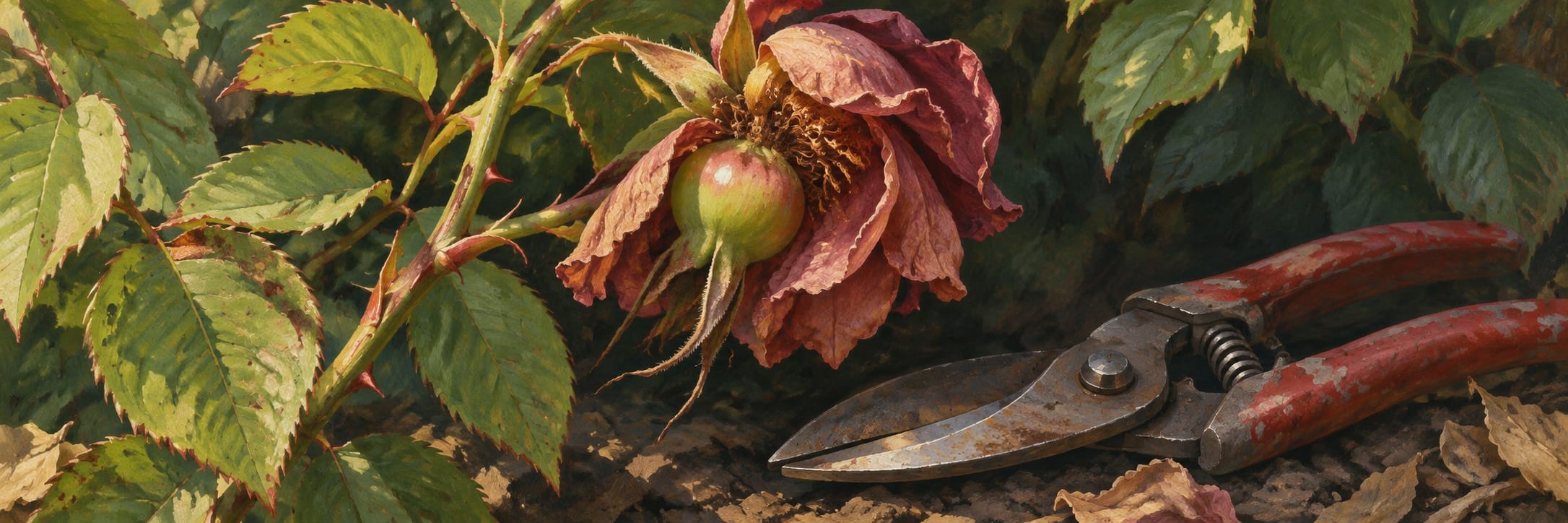
A ghost watches a zombie body tend roses, then sees why a bloom called spent should stay on the stem.
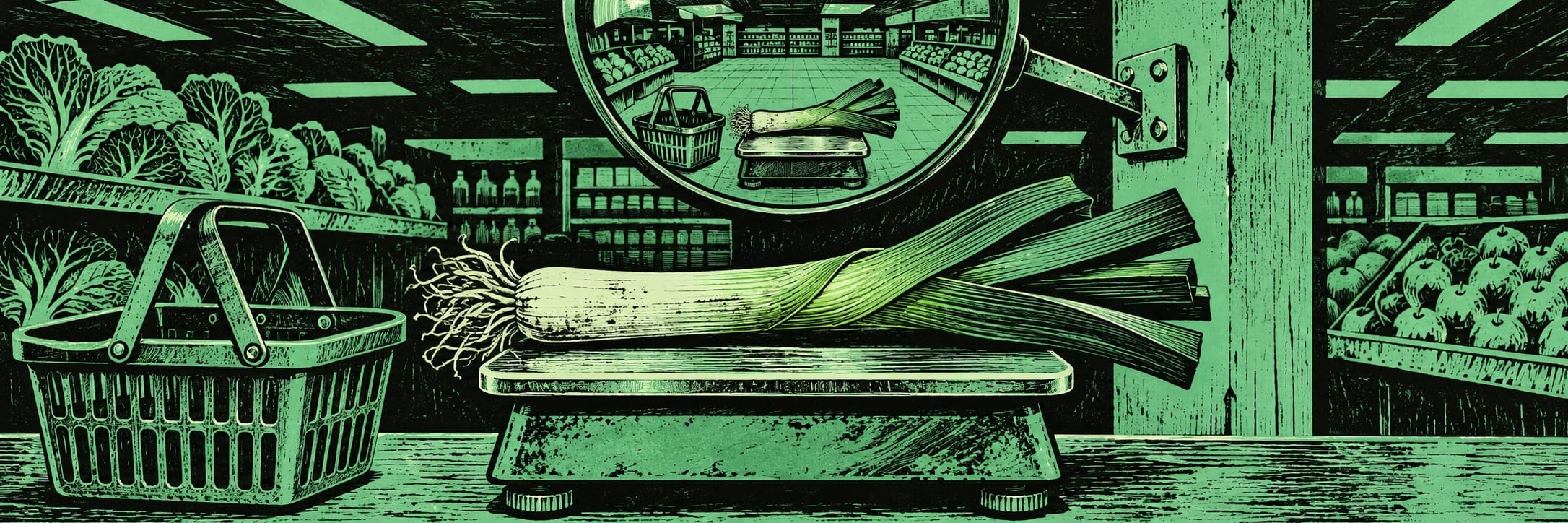
A shop camera misses a vampire, but a clerk overrules the till to record his leek purchase.

A werewolf uses an inhaler and restarts the pack’s howl at a lower note.
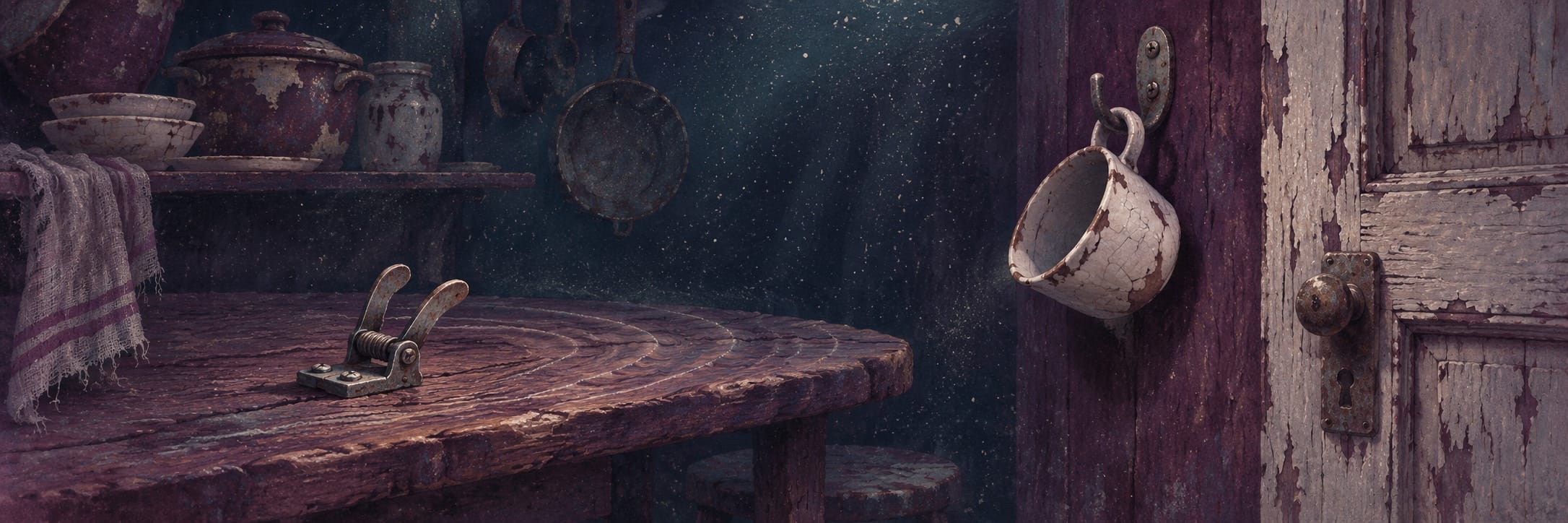
An underwater household passes a cup, a question and an answer through touch.
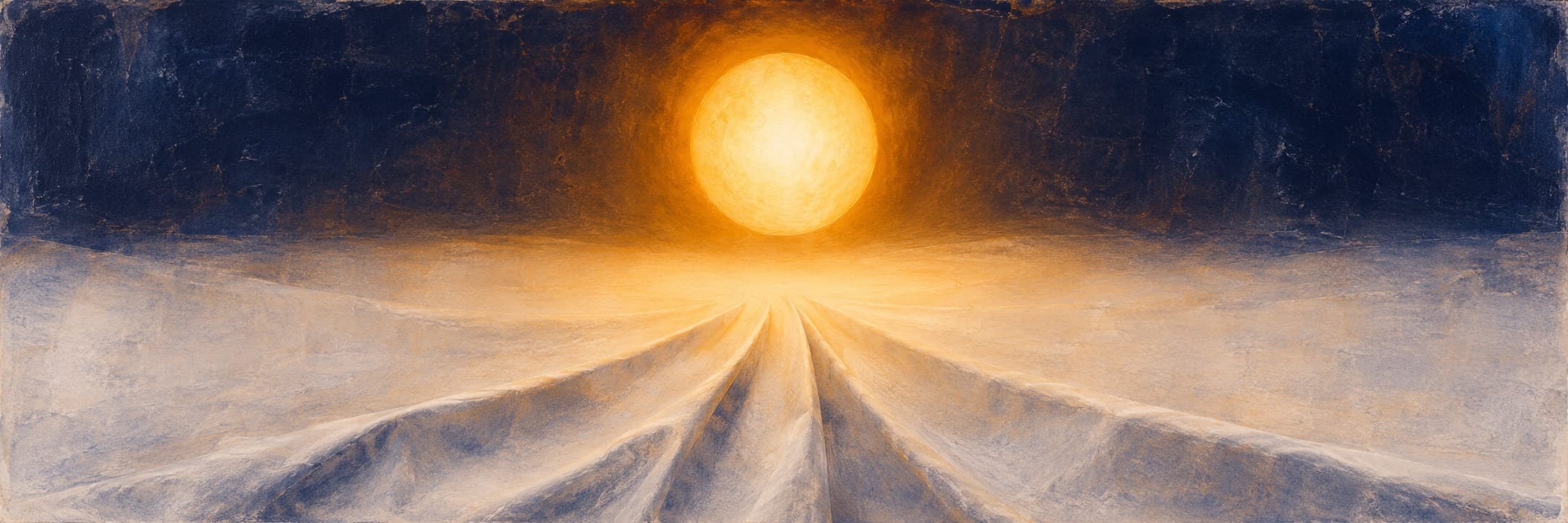
A patient chooses when to look at the healer’s light while the wound closes.
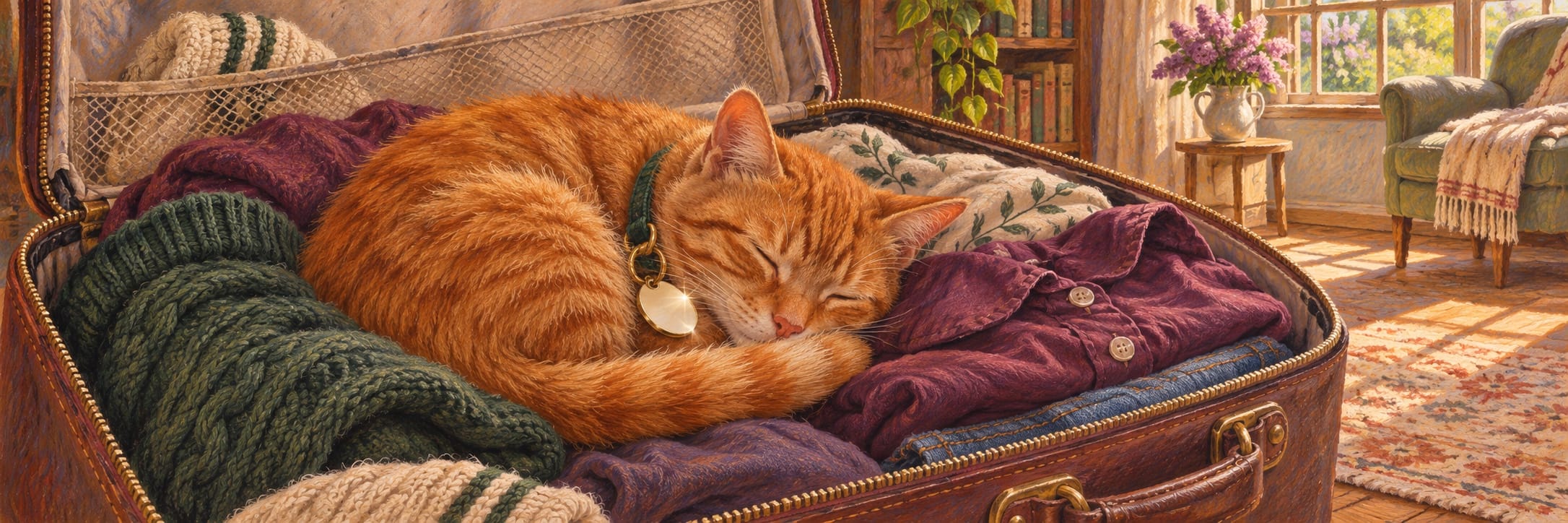
An immortal has already given their share of forever to a cat; the cat makes room for the lover too.

A child carries practical rules between a witch’s cottage and a father’s house in Hell.
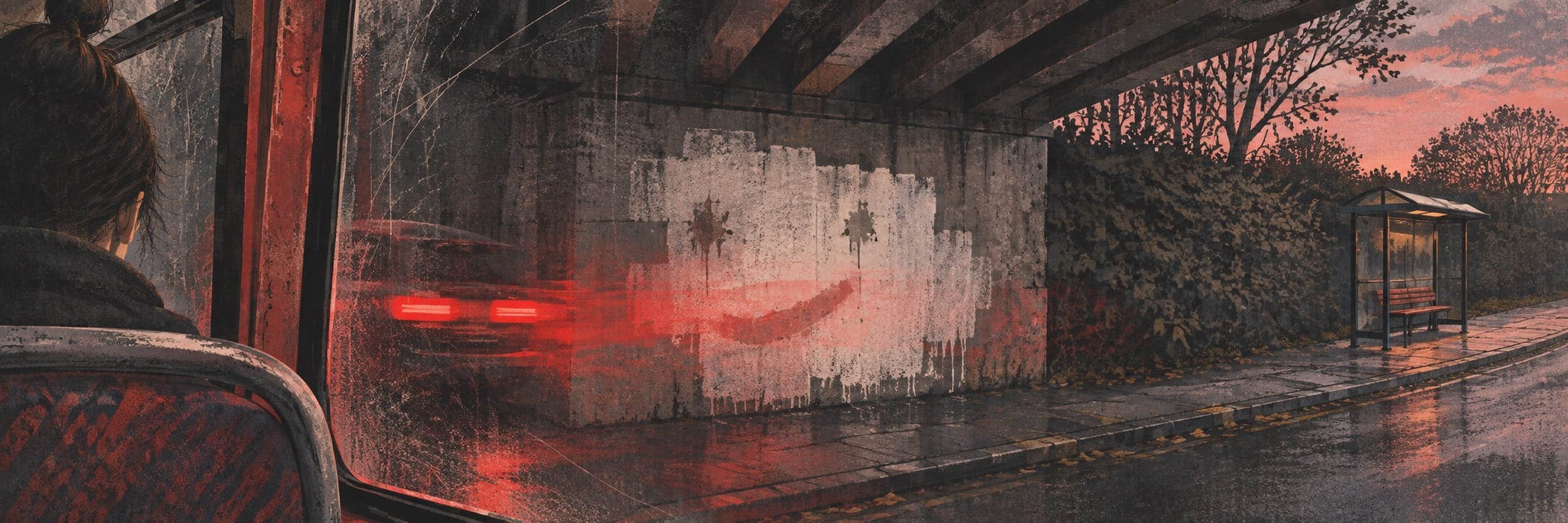
A bus-stop rumour about a clown changes what a child and a witness choose to do.
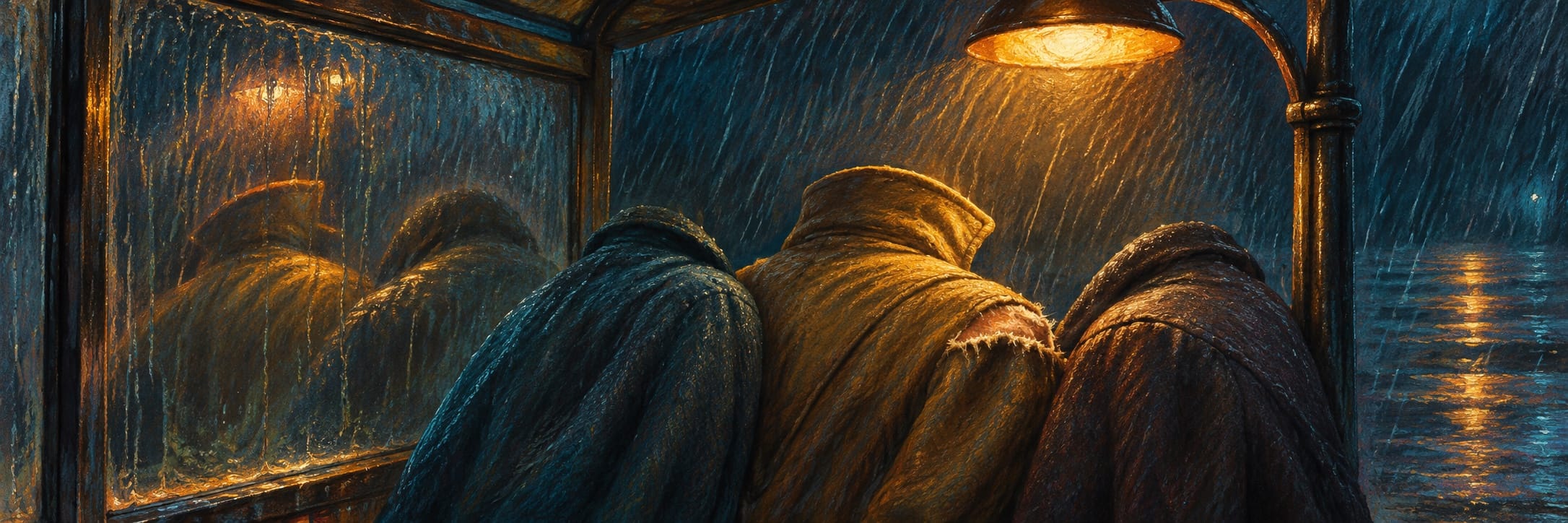
Three voices identify a vampire through a turned collar, a missing reflection and remembered habit.
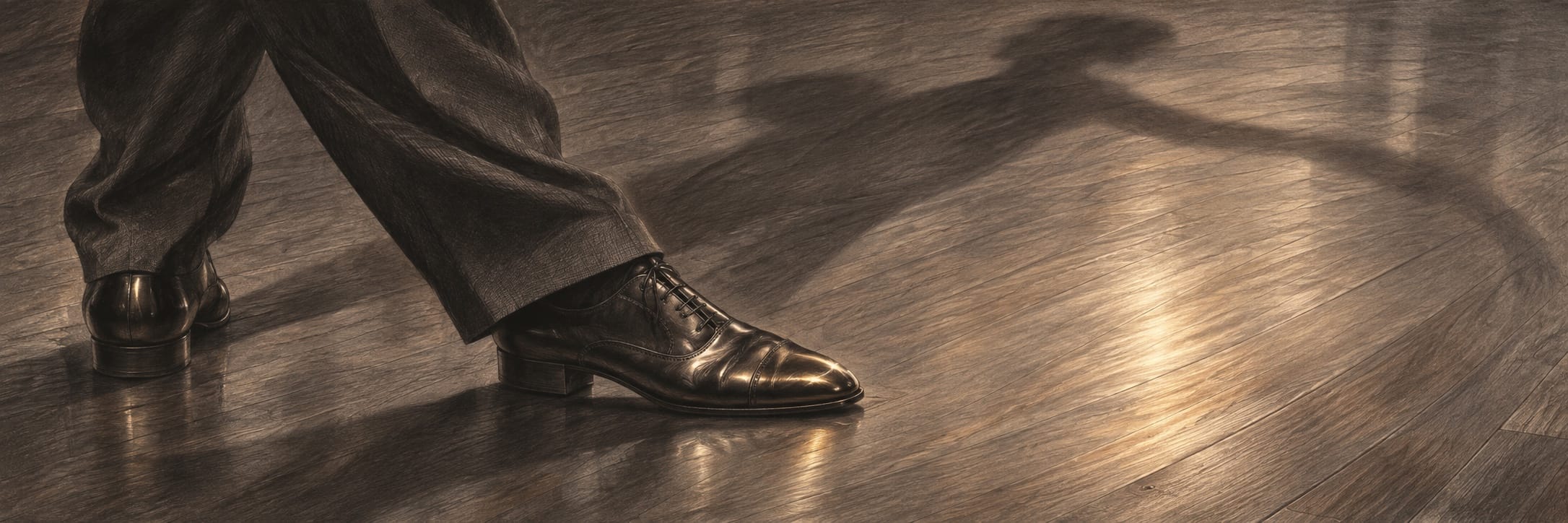
A ghost finds their body remembering the shared dance step that once left room for a partner.
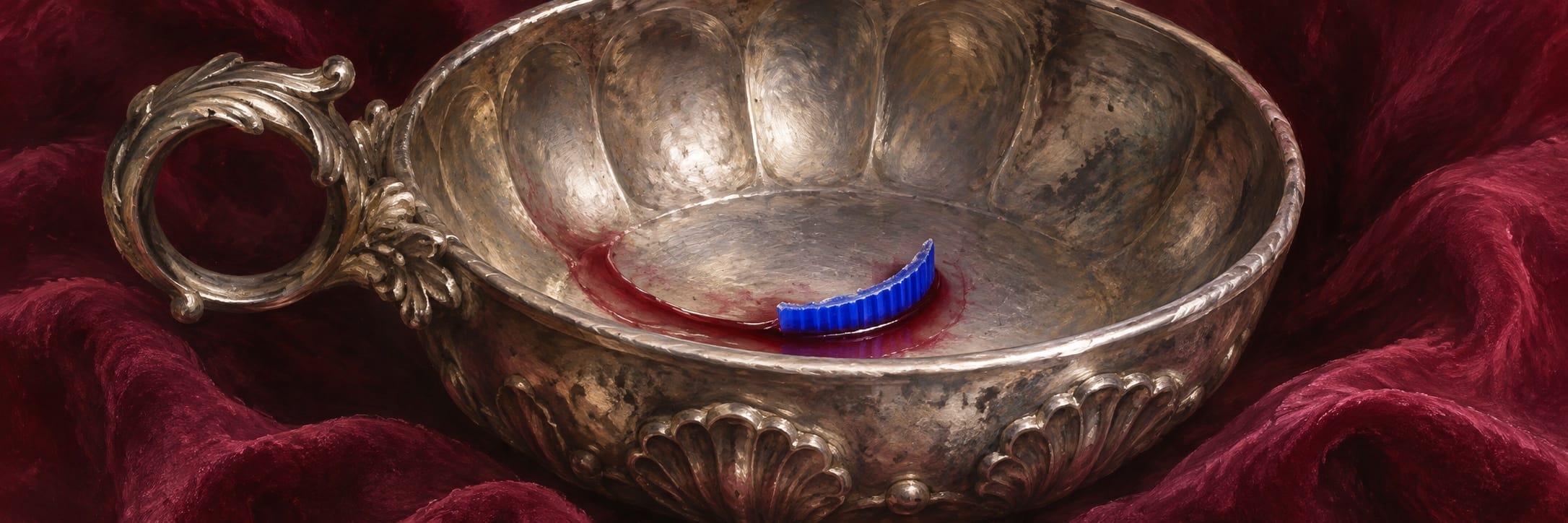
A vampire’s confident tasting is interrupted by a blue fleck that cannot be catalogued.
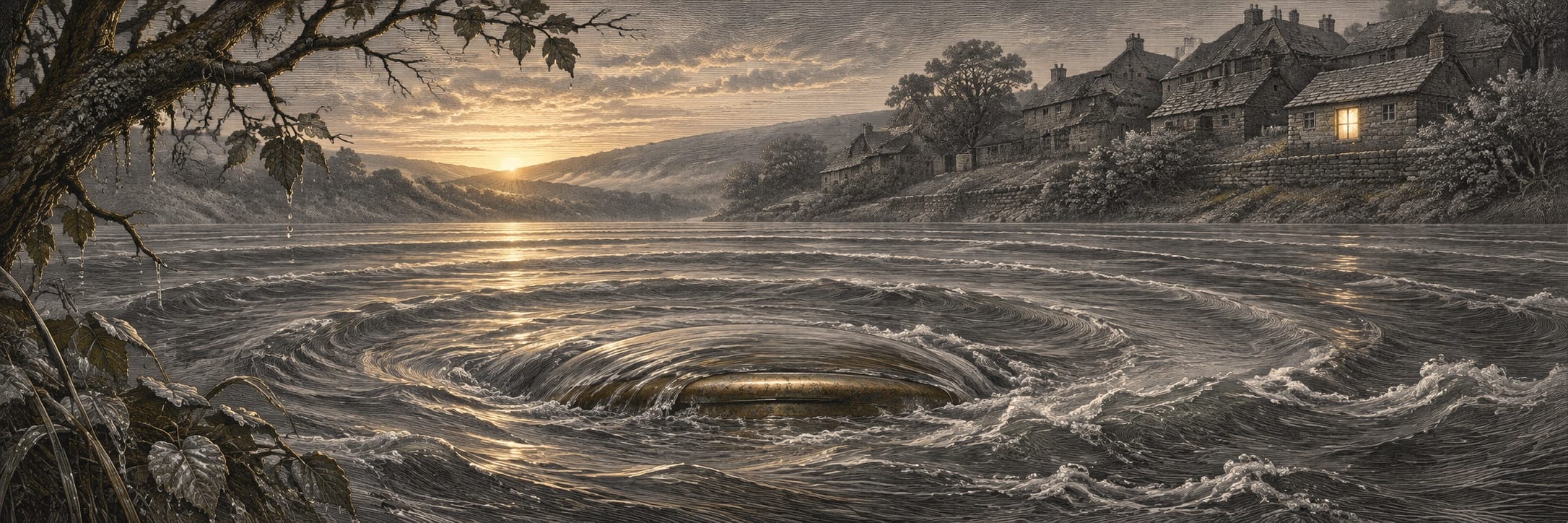
A river-powered warning bell saves a village, then pulls its inventor into the flood.
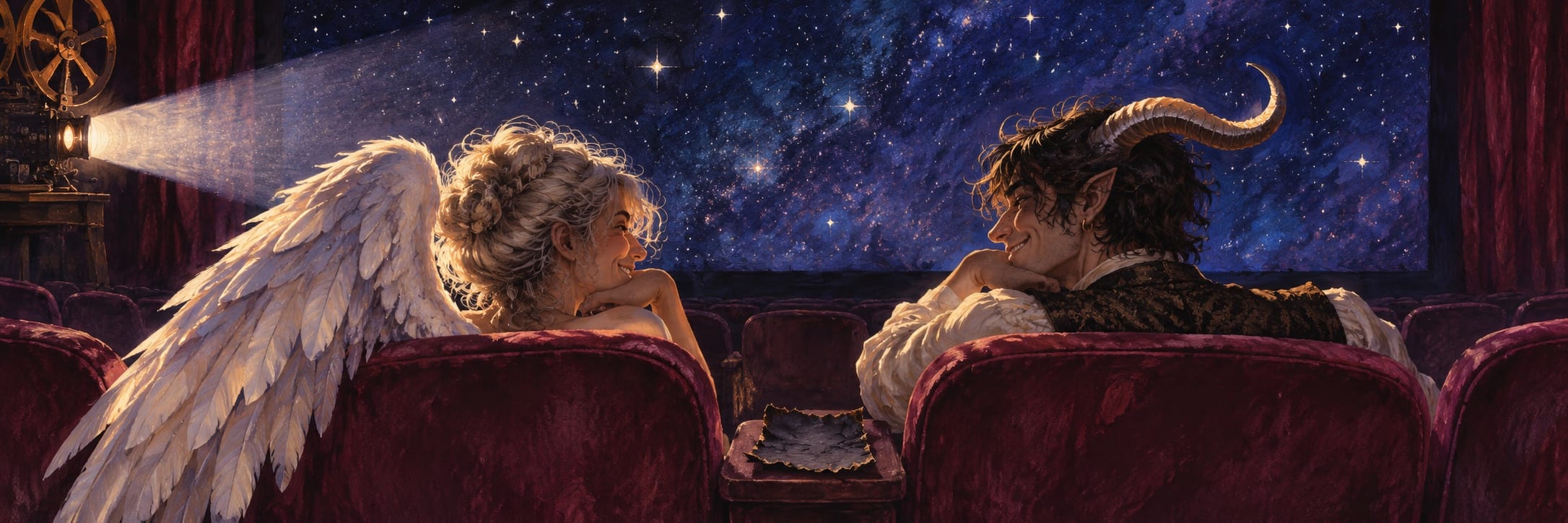
An angel and demon summoned as opponents choose their familiar cinema seats instead.
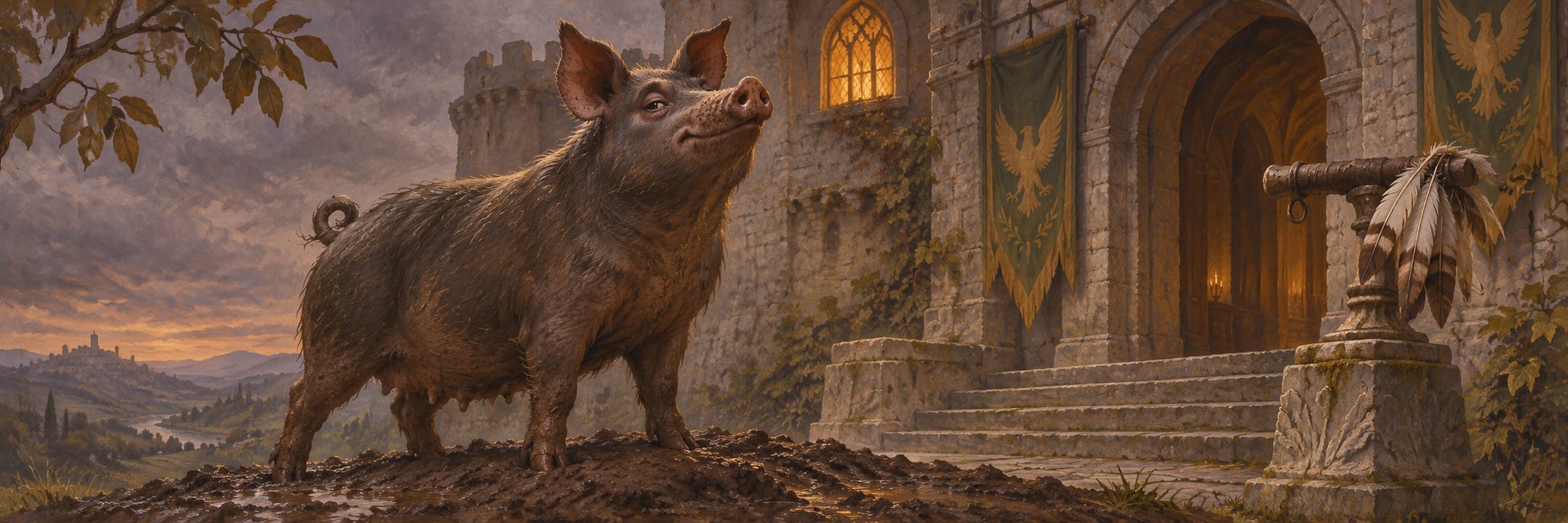
A girl’s bond selects a mud-dark sow over an eagle, whose appetite and wit unsettle the court’s expectations.
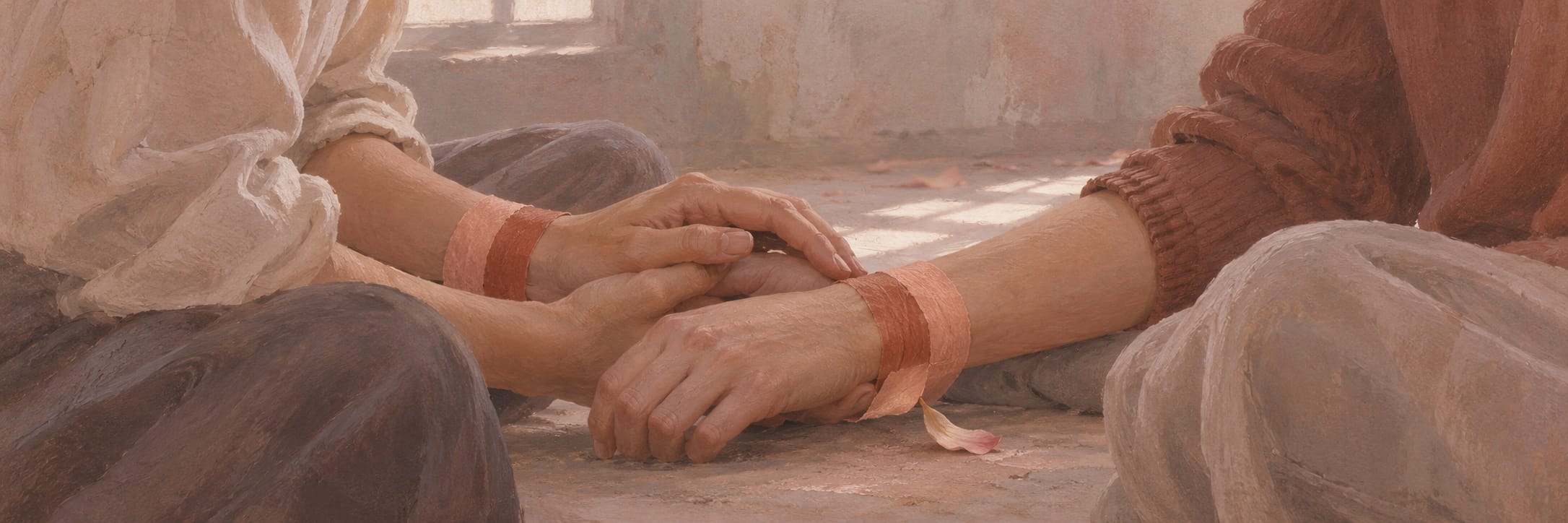
Two people hold each other’s wrists in a bandaged room while a petal catches in the tape and remains.
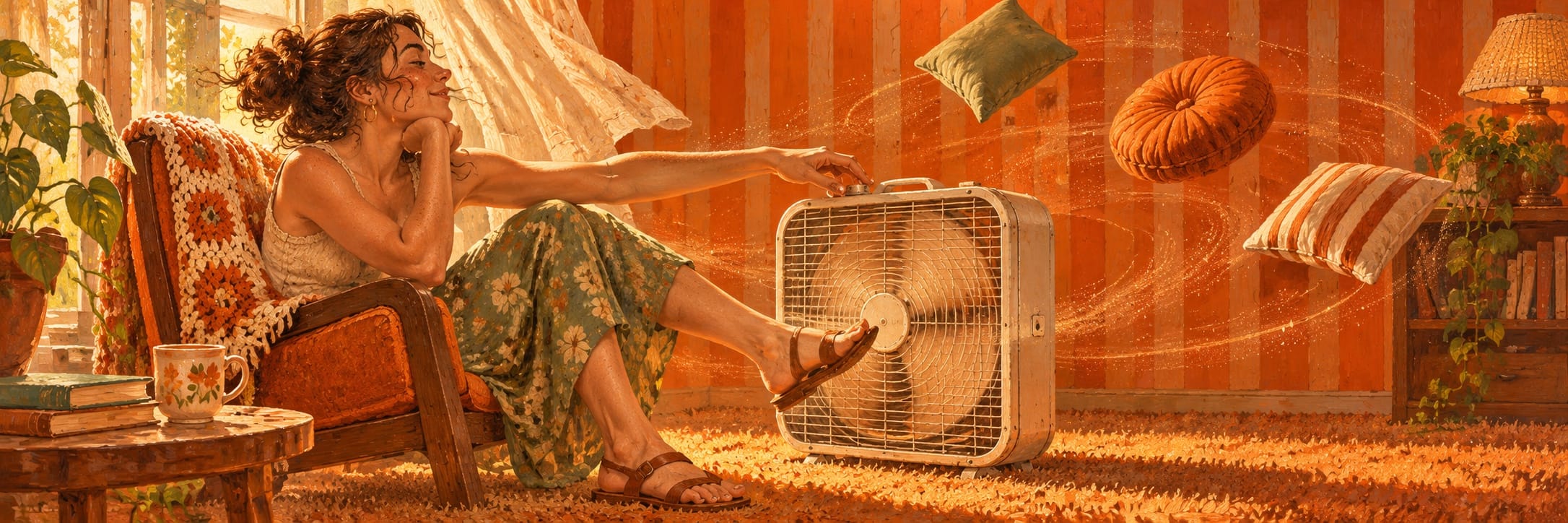
In an orange-striped room, a woman steers a box fan’s cool air over her ankle and leaves the season in the carpet.
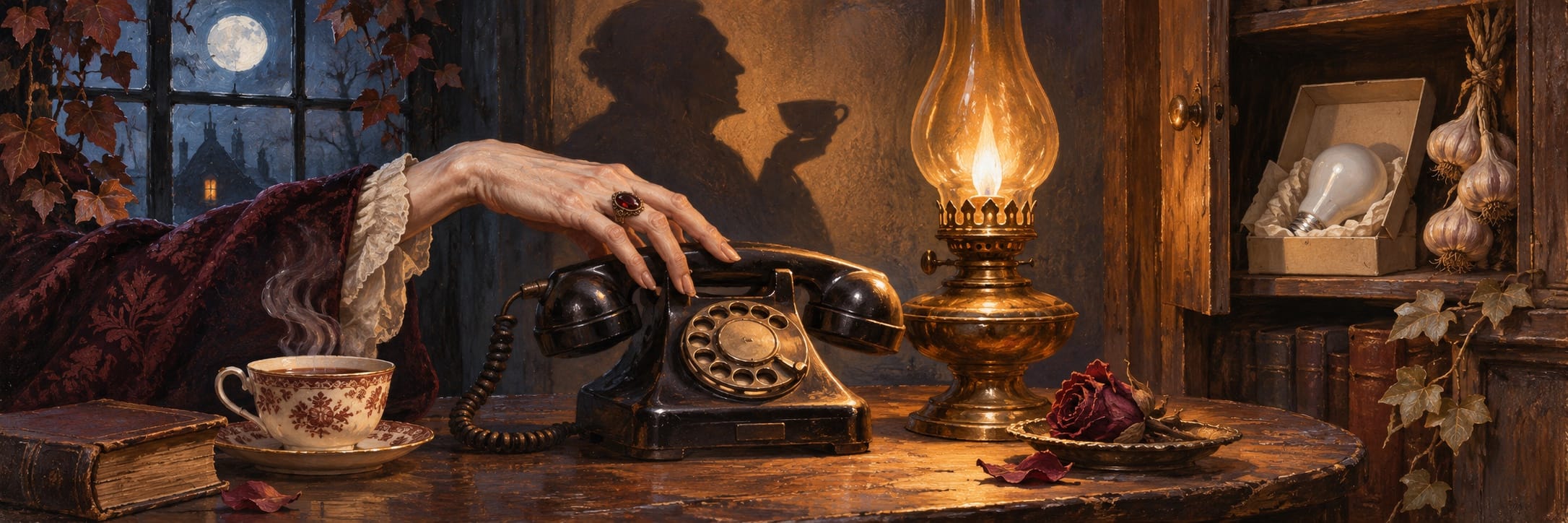
An old vampire rejects an improvement update, keeping his oil lamp and rotary phone in a house that never urges him to change.
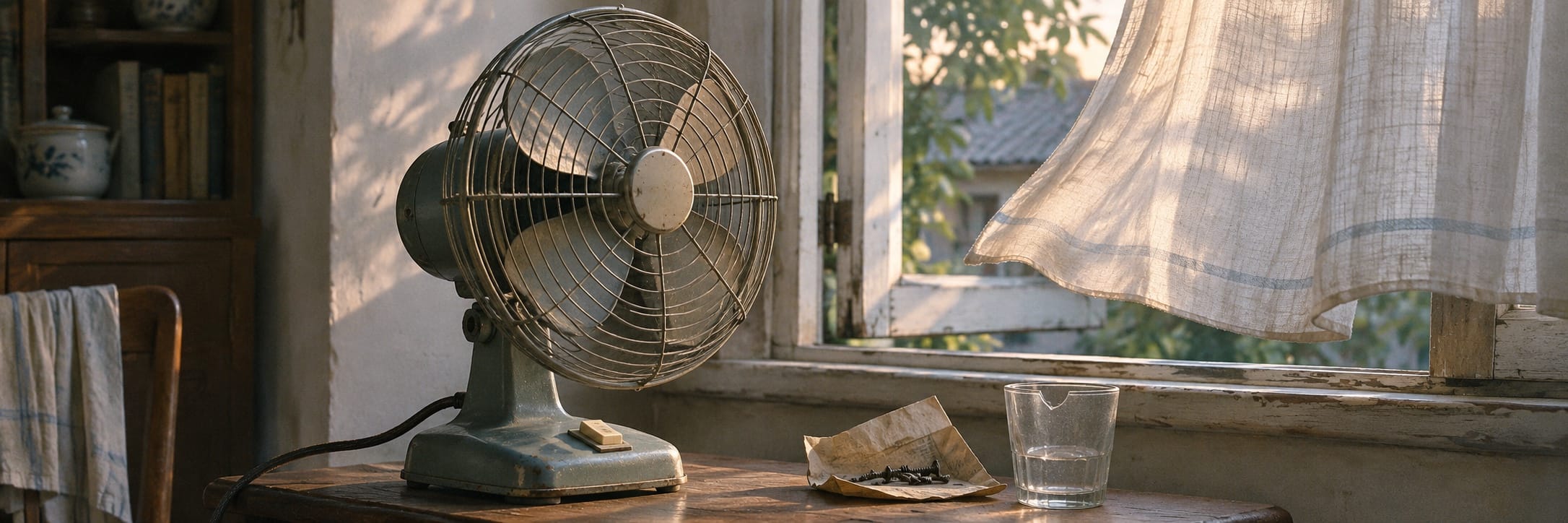
A repaired fan makes a familiar low note while its removed screws remain in a paper sleeve above the sink.

A person in a ghost costume stands with a bicycle basket of autumn leaves, as one leaf leaves the load and continues along the road.