
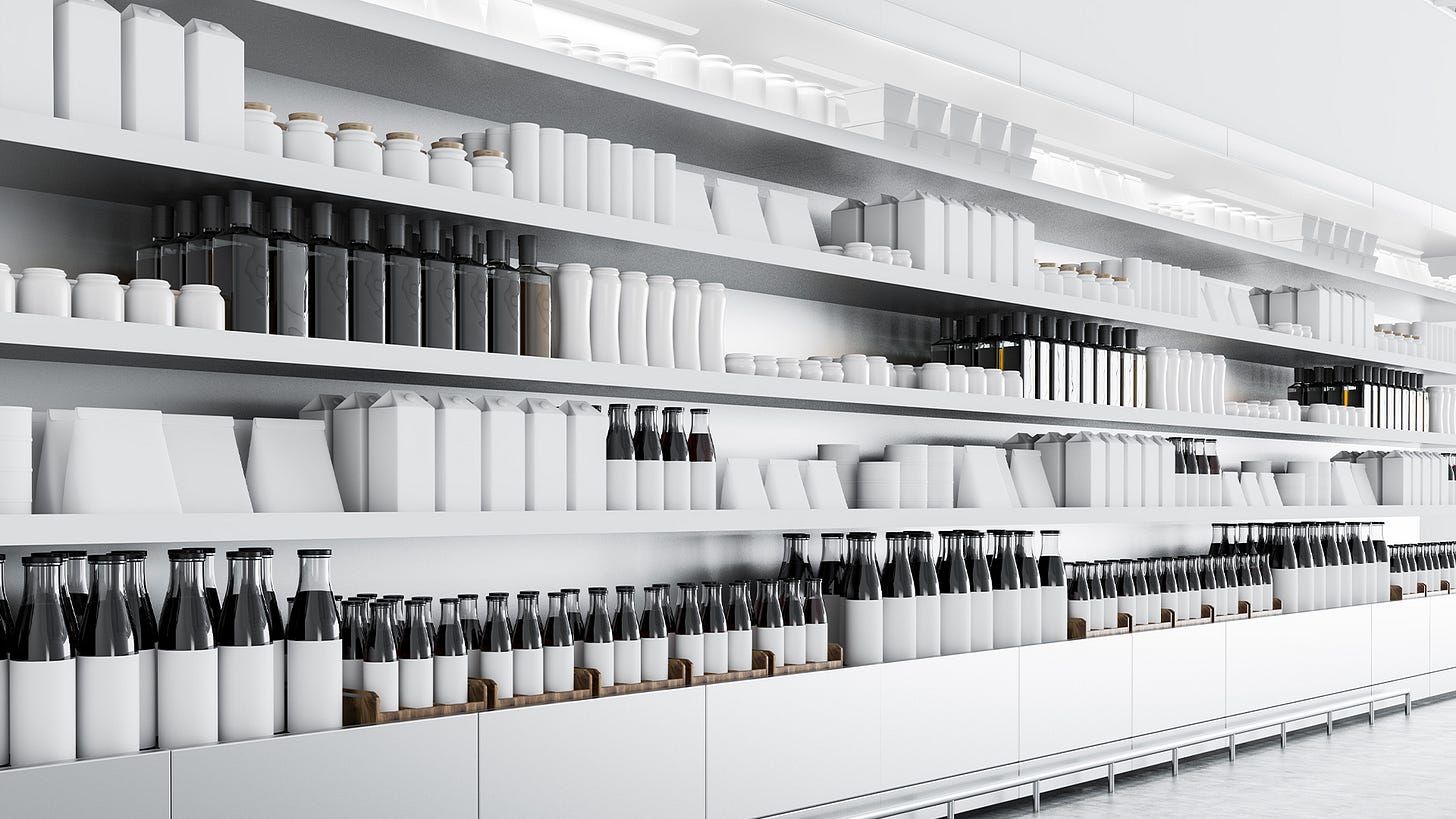
The pressure isn’t coming from one direction — it’s coming from everywhere.
Food and beverage companies face heavier business pressure today than they did even five years ago: rising commodity costs, retailer price pressure, distributor consolidation, and new distribution models (including direct-to-consumer and online retail entrants). At the same time, large manufacturers of staples are losing ground to smaller, faster competitors that are meeting consumer demand for more innovation, healthier options, and door-to-door delivery. Even historically dominant brands are playing catch-up as expectations rise around transparency in ingredients, sourcing, and sustainability.
TL;DR: This post breaks down what’s changed in food and beverage marketing, why emotional connection still matters (even in B2B), and how to build a modern multi-channel approach without losing the personal relationships that still drive the category.
The last five years changed the rules
When consumer expectations evolve faster than your marketing systems, you don’t just lose attention — you lose shelf space, mindshare, and margin.
In practical terms, the same product now has to win in more places, with less patience from the buyer:
Price pressure became visible: pack-size changes and price increases turn “habit buys” into “prove it” buys.
Being stocked isn’t the same as being found: retailer search and sponsored placements increasingly shape what gets discovered.
Social became a decision channel: a 15-second clip, a quick review check, and a retailer page can now close the loop in one sitting.
Transparency moved from ‘nice-to-have’ to baseline: ingredients, sourcing, and sustainability claims need specifics, not slogans.
Supply volatility hits loyalty fast: out-of-stocks and inconsistent availability break repeat behaviour quicker than competitors do.
Food is emotional — even when the buyer is “B2B”
When it comes to food and beverage marketing, the emotional connection within B2C purchasing is unusually strong: hunger, thirst, cravings, nostalgia, and trust in origin all play a role in what people choose.
But the bigger miss is assuming B2B decision-making is purely rational. Retailers, distributors, and channel partners still sell to emotional humans. They evaluate whether your product will move — and whether the consumer story is strong enough to justify choosing you over the dozen alternatives fighting for the same slot. If your brand can’t be explained quickly, confidently, and credibly, you become harder to list, harder to sell internally, and easier to replace.
Low loyalty cuts both ways
This category is extremely competitive, and loyalty is famously low. That creates opportunity because customers will switch — and pressure because they can switch again.
So the job of marketing isn’t only acquisition. It’s retention through experience: consistent quality, consistent messaging, and trust earned at every interaction. At the same time, many businesses are shifting from relationship-only selling to a multi-channel model, where personal relationships are supplemented by digital touchpoints that help people discover, compare, and decide.
The shift: relationship selling → multi-channel selling
The industry is broad: restaurant equipment, food supply and distribution, processing, manufacturing, food safety, and more. That complexity makes one thing clear — you can’t rely on relationships alone.
Modern growth comes from a multi-channel model where relationships are supported by:
sales enablement content (so reps don’t have to explain from scratch)
product stories that travel across channels (packaging, site, retailer pages)
digital touchpoints that keep trust intact (proof, clarity, responsiveness)
mobile and social content built for quick decision moments
What good food & beverage marketing looks like now
1) A story that earns trust fast
Ingredient transparency, sourcing, sustainability, certifications, and safety can’t live only on a “values” slide — they need to show up as proof.
Micro-example: a simple “What’s in it / Where it’s from / Why it matters” block on your product page, echoed on packaging and retailer listings.
2) A product narrative built for the channel
You need a consumer story that moves product off the shelf and a buyer story that makes it easy to list, stock, and sell.
Micro-example: consumer-facing benefit + use moment (“quick lunch that still feels clean”) paired with buyer-facing clarity (case sizes, shelf life, margins, delivery cadence, merchandising support).
3) Content that does real work
Thought leadership still matters — but many brands see stronger results when they pair it with mobile-first content, social content designed for quick decision moments, proof-led landing pages, and clear differentiation without jargon.
Micro-example: 15–30 second “why this exists” videos + a landing page that answers the top five objections (price, ingredients, sourcing, allergens, availability).
4) A customer experience that reduces switching
Low loyalty means every interaction counts: speed, clarity, service, and consistency. Marketing and operations can’t be siloed, because the experience is the brand.
Micro-example: confirm lead times clearly, respond fast, keep stock communication honest, and make reordering frictionless.
Try this (a simple way to tighten your strategy)
Write the “shelf pitch”. In one sentence: why would a consumer choose you?
Write the “buyer pitch”. In one sentence: why is your product easy to stock and sell?
List your proof. Ingredients, sourcing, sustainability, safety, consistency — what can you show?
Map your top 3–5 decision touchpoints. Where do people actually decide? (Search, social, retailer page, packaging, in-store, sales call.)
Fix the weakest link first. Don’t redesign everything. Improve the touchpoint that’s currently leaking trust.
If you’re in food & beverage, here’s where we’d start
If this sector is yours, the highest-leverage first step is usually clarity + proof — before you throw more spend at ads.
A practical starting package looks like:
Channel messaging map: one clean story for consumers, one for buyers, aligned to the same proof.
Product page structure: a repeatable layout that answers objections fast (ingredients, sourcing, safety, availability, value).
Touchpoint audit: identify the one place you’re leaking trust (retailer pages, packaging, onboarding, reorder) and fix it first.
The goal isn’t “more marketing”. It’s smarter marketing that earns attention and keeps it.
If you’re still reading (respect)
Hit reply if you want a follow-up with practical templates: channel messaging, product-page structure, and a content plan that supports sales without turning your brand into noise.
Or tell me where you think I’m wrong.
That’s the best part of the internet when it’s working: we make each other sharper.


No published comments yet.