
Free podcast
Listen to the episode
Play “How Fine Art Fixes Cognitive Blindness” here, or continue reading the episode notes below.
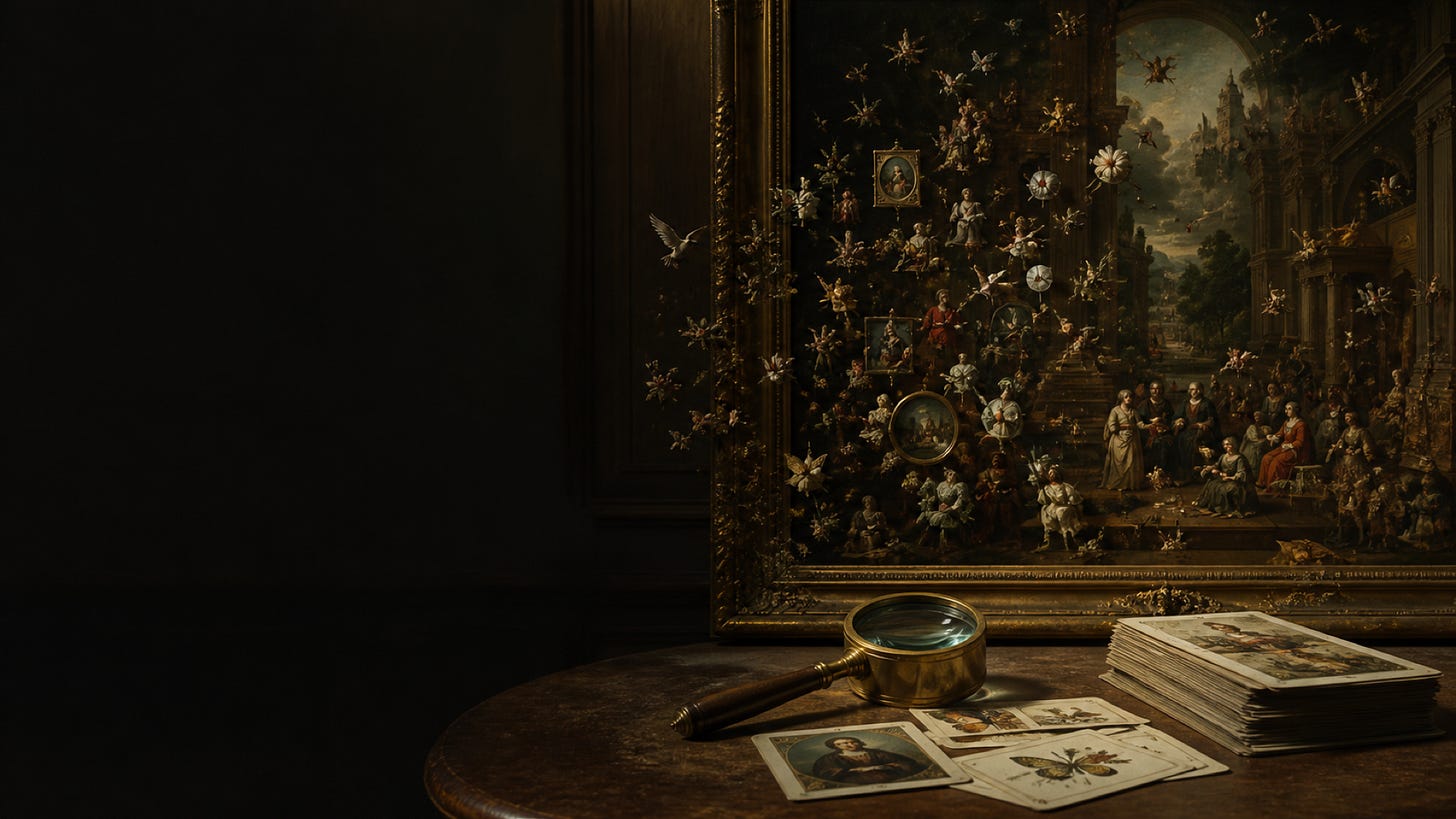
Most difficult problems do not arrive as neat facts. They arrive as noise: too many signals, too much confidence, and a mind already deciding what matters. This episode asks whether fine art can be a practical training ground for seeing more of what is there.
Starting with a crowded painting and the idea of attention as a limited resource, it follows the ways we tunnel in on the obvious, mistake a familiar story for the whole picture, and build explanations from fragments. The argument is not that art makes anyone immune to bias. It is that sustained looking can make the moment of assumption easier to catch.
The episode moves between visual analysis, cognitive filtering, self-awareness and the discomfort of opposing interpretations. Use it as a prompt to slow down before you diagnose a team problem, read a room, or decide you already know what a situation means.
In this episode
Why focused attention can hide the wider system.
How an artwork can reveal the narratives a viewer brings to it.
A practical shift from quick explanation to better observation.
Source and AI disclosure
This audio episode was generated in Google NotebookLM from Richard’s own knowledge materials. The accompanying episode notes were developed from the supplied transcript. Examples and claims in the audio are not independently verified here.


No published comments yet.