
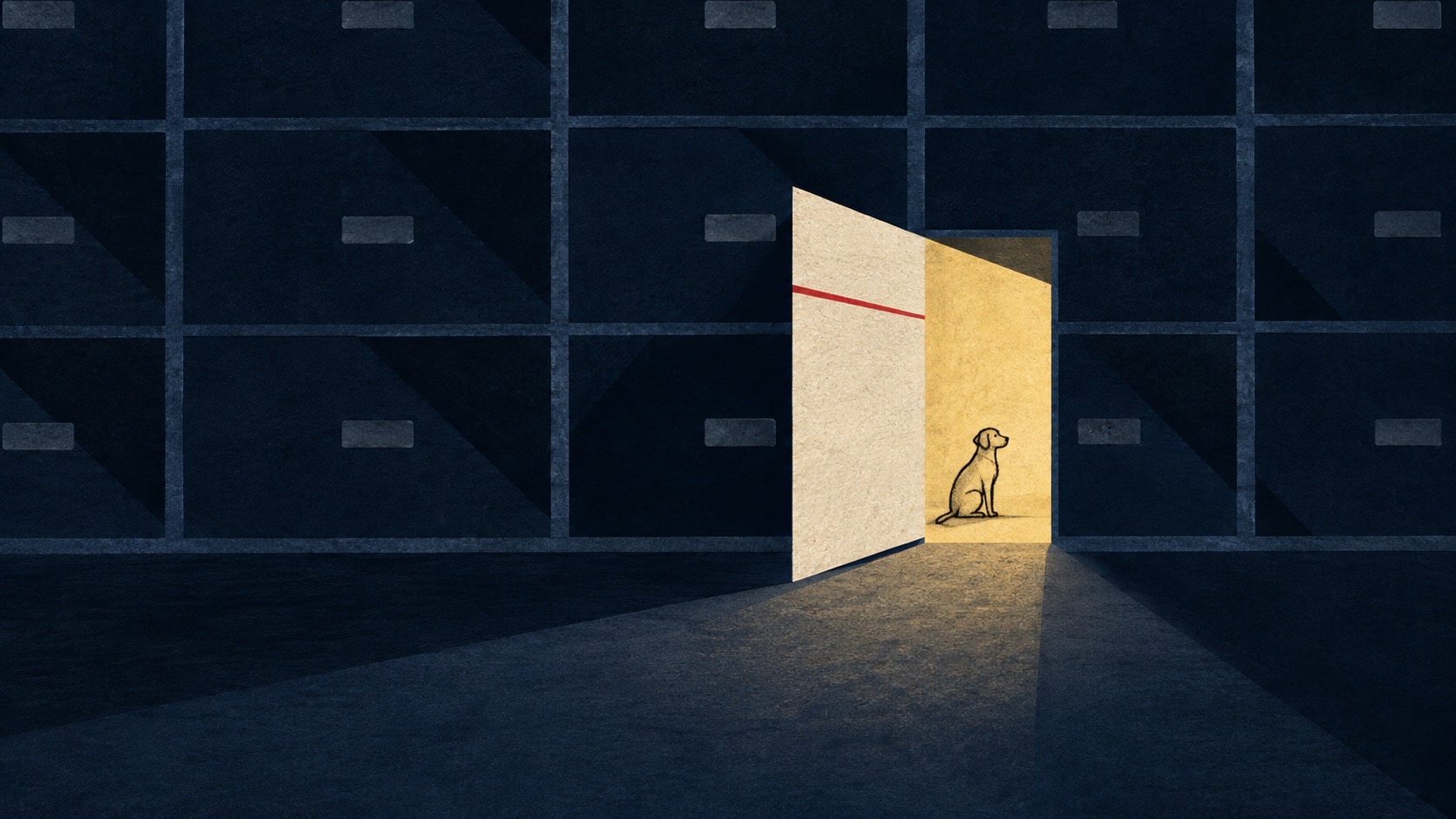
At the returns depot, every failed journey had a barcode and a reason.
NO SUCH NUMBER.
MOVED, LEFT NO ADDRESS.
REFUSED AT DOOR.
Imani sorted them into metal cages beneath the loading-bay lights. By morning, the cages would be emptied into lorries and carried back towards whoever had believed an address was enough.
The depot had no category for a future. Futures were treated as incorrect data.
At 04:11, she scanned a parcel the size of a lunchbox.
The system froze.
RECIPIENT: IMANI SULE.
The postcode was nonsense. The road name had bled into itself in rain. But the handwriting on the label was hers: swollen capitals, the habit of underlining every important word twice.
TO THE PERSON I WILL BE.
She took it to the break room and put it beside her tea.
“Open it,” said Rakesh, who had been sorting cosmetics returns for twelve years and believed mystery was poor stock control.
“It is addressed to me.”
“That usually helps.”
Imani did not open it. When she was nine, she had written letters to a future self who lived in a house with a red door, owned a dog and knew how to answer questions in meetings. The dog had never arrived. The red door belonged to a house she had only driven past. Meetings had become her speciality, though not the answering part.
“Put it in Exceptions,” Rakesh said.
“It will be sent back.”
“Everything gets sent somewhere.”
“Not everything.”
He looked at the label. “You cannot claim a parcel because you recognise the handwriting.”
“I am the named recipient.”
“You are the named recipient of a made-up address.”
The supervisor, Graham, came through with a clipboard. “Problem?”
“Self-addressed item,” Rakesh said. “Temporal discrepancy.”
Graham took the parcel, scanned it and watched the system reject it. “Put it in Return to Sender.”
“The sender is nine,” Imani said.
“Then the sender has learnt something useful.”
She took the parcel back before he could place it in the red cage.
“You have a history with this?” he asked.
“No.”
That was close enough to a lie that he wrote her employee number on his clipboard.
At five, a woman came to the depot counter asking for a lost parcel.
“My daughter's,” she said. “She posted it yesterday from school. They said it had an invalid address.”
The woman held the hand of a girl in a yellow raincoat. The child kept her eyes on the floor.
“What was inside?” Imani asked.
“A letter,” said the girl.
Imani looked through the glass at the lunchbox parcel.
“Who was it for?”
The girl whispered, “Me later.”
The mother smiled the way adults smiled at things they planned to forget. “It is just a project. Their teacher makes them write to themselves at the end of term.”
“And what address did you use?” Imani asked.
The girl looked at her mother, then said, “The house with the yellow door. But we don't live there yet.”
“We might not live there,” the mother said quickly.
“You said maybe.”
Imani thought of all the parcels behind her: kettle bells, school shoes, a blue dress in plastic, each one containing somebody's poor attempt to reach the right life.
“Wait here,” she said.
The child’s parcel had already been placed in the red cage. Its label had the careful loops of a new writer.
FOR AYESHA WHEN SHE IS BRAVE.
Graham appeared behind Imani before she could touch it.
“That one goes back.”
“The sender is here.”
“Then give it back to her.”
“She does not want it back now.”
“That is not a recognised delivery instruction.”
“It should be.”
Graham's expression tightened. “Do you think you are making the rules kinder by making them vague?”
Imani remembered being nine and asking her aunt whether a future self could collect post. Her aunt had said, No one collects what they haven't earned. At the time Imani had believed this was about stamps.
“I think the rule is wrong for the item,” she said.
“Then write a proposal. Do not invent a storage category at five in the morning.”
The girl was watching through the counter window. Her mother had crouched beside her, speaking too softly to hear.
Imani took a plain carton, a marker and a roll of labels.
“The address doesn't have to exist yet,” she told the girl. “But it has to tell the next person what to do.”
Together they wrote:
HOLD FOR COLLECTION. DO NOT RETURN TO SENDER.
The girl drew a small yellow dog beneath the words.
“When can I collect it?” she asked.
“When you know where you are going,” Imani said.
The mother looked as if she might object. Instead she said, “That could take a while.”
“The depot has time,” Imani said.
This was not entirely true. The depot had retention limits, audits and an alarming number of mice. But it also had a long-term cage at the back, intended for legal disputes, estate effects and objects that had acquired more than one claimant.
Imani placed the parcel there. Then she printed a temporary hold form and asked the mother for a telephone number.
“Will it be safe?” the girl asked.
Imani looked at the cage. “It will be here.”
After they left, Graham stood beside the printer.
“You cannot do that again,” he said.
“I can log it as an unverified collection hold.”
“And when it expires?”
“I will review it.”
“You are making yourself responsible for every sad label in this building.”
“No.” She looked down at the yellow dog. “Only the ones I change.”
He did not report her. He did not approve it either. He walked away with the clipboard held flat against his thigh.
Rakesh returned from break and found Imani beside the long-term cage.
“You won,” he said.
“It is a ninety-day hold.”
“That is how winning looks here.”
She went back for her own lunchbox.
Rakesh had gone home. The lights over the loading bay buzzed. She peeled the wet label from the parcel and found a second line beneath it, in her nine-year-old hand:
IF THIS IS NOT YOU YET, KEEP GOING.
She read it twice while the loading-bay lights ticked above her.
Inside was a folded drawing: the red-door house, the dog, a woman standing on the pavement with her hands in her pockets. On the back, her child-self had written a list.
Be good at saying what you mean.
Do not forget Mum's birthday.
Have somewhere to put things.
Imani laughed, then covered her mouth because the sound in the empty depot was too large.
She printed a new label.
In the recipient field, she wrote her name.
In the address field, she wrote:
HOLD FOR COLLECTION.
The system rejected it twice. On the third attempt, she selected the long-term cage code and entered herself as both claimant and reviewer.
CONFLICT OF INTEREST, it warned.
She pressed acknowledge.
Then she put the parcel beside the girl's and switched off the scanner.
At six, before the day staff arrived, Imani pinned a sheet of paper above the cage.
Items are not abandoned merely because their destination is unfinished.
Below it, in smaller handwriting, she added:
Review before return.


No published comments yet.