
What this is
This is a strategy article for quick-service restaurant, franchise and retail teams planning a short family-meal or family-value campaign. It is not a results case study, and it does not claim a campaign outcome. It is an anonymised operating model for thinking through the offer, the store experience, the reward mechanic, the compliance guardrails and the measurement plan before a campaign goes live.
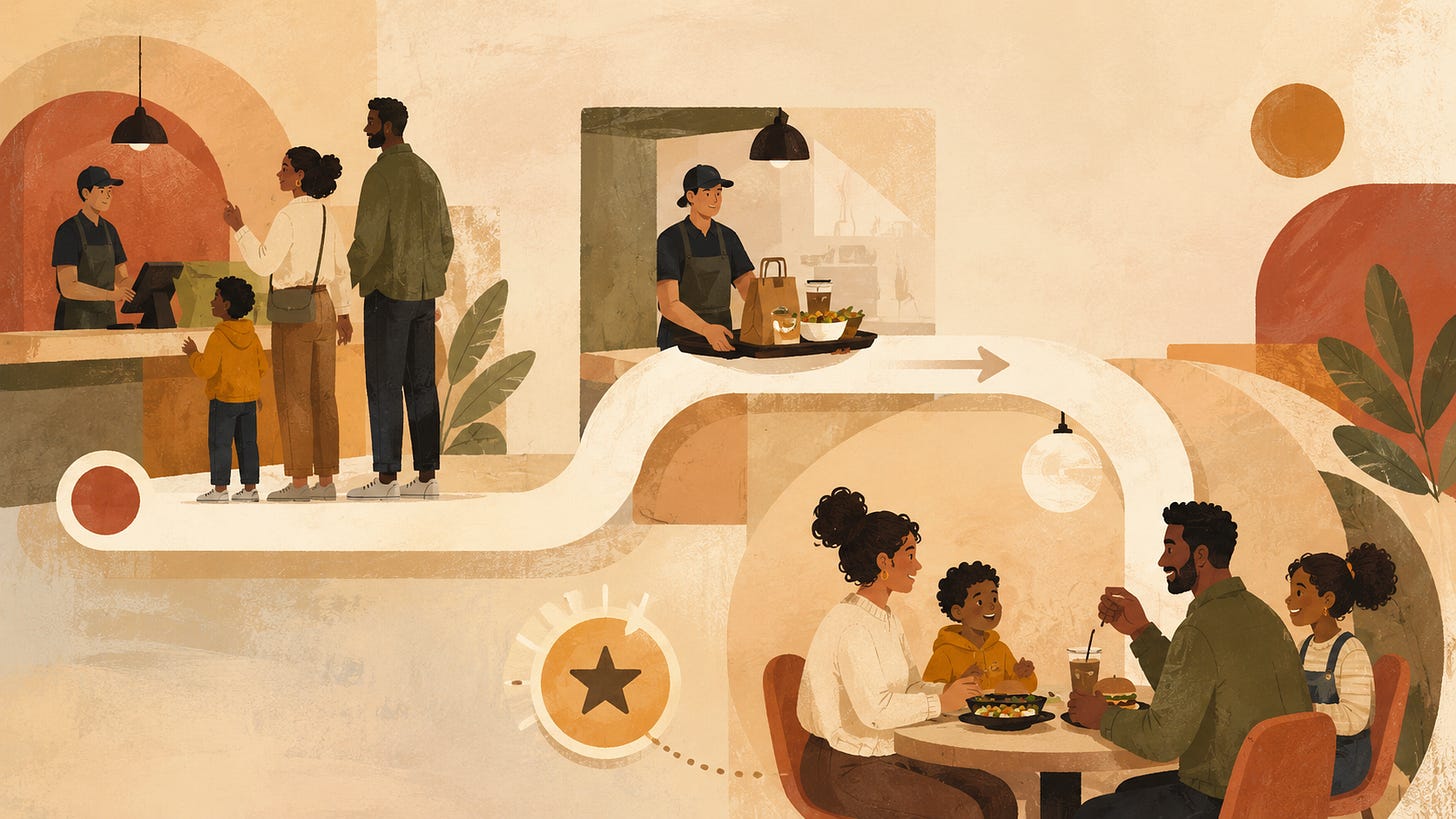
The core argument is simple: family value is not only the price on the poster. It is the managed visit around the offer. A stronger campaign makes the meal easier to choose, the wait easier to understand, the reward easier to redeem, the store team’s job easier to run, and the result easier to measure.
In one minute, the model is this:
The common mistake: treating family value as a discount message instead of a store experience.
The better frame: make the visit feel clearer, fairer, faster and worth repeating.
The campaign model: clear offer, small capped reward, waiting and kiosk cues, adult-facing family framing and simple measurement.
The test: if staff cannot explain it, pause it, redeem it and measure it cleanly, it is too heavy.
Source note: This article is based on anonymised strategy work in the quick-service restaurant space. No client names, store names, staff names, agency names, vendor names, private access details, proprietary data, exact budgets, direct emails or customer information are included.
The campaign often fails before the poster does
Most family-value campaigns make the same mistake: they treat value as a number. A lower price can help, but a tired parent waiting to order is not only weighing the price. They are deciding whether this choice will make the evening easier.
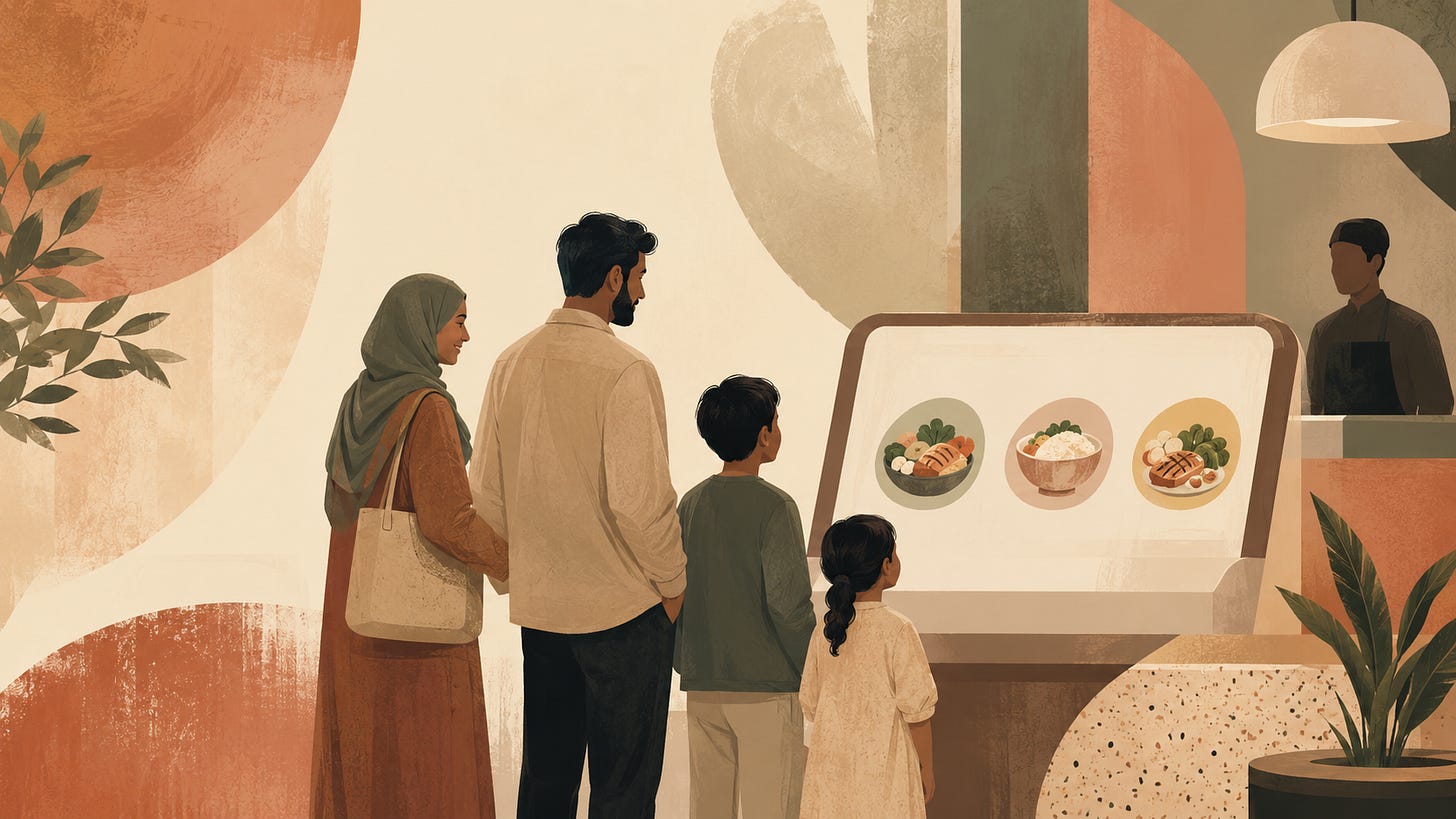
That distinction changes the work. The goal is not simply to make the offer look cheaper, louder or more urgent. The goal is to make the visit feel clearer, fairer, easier to complete and worth repeating.
A discount can create attention. A managed visit can create trust.
The anonymised brief
The work behind this article came from a familiar quick-service restaurant situation: a multi-store group needed a short family-meal push inside a tight trading window. The budget was real but not endless, the stores were busy, and the campaign had to create energy without creating operational drag.
The brief, stripped of identifying detail, looked like this:
Lift family-meal purchases.
Keep the campaign light enough for store teams to run.
Add a small “something extra” to stand out.
Avoid heavy app, menu or point-of-sale changes.
Use local store visibility and light paid media.
Make redemption cashier-managed.
Create a reason to return.
Measure the result before scaling.
Avoid child-directed marketing.
That last requirement matters. “Family” is not a loophole for speaking directly to children. It means the campaign can be warm, useful and family-appropriate while still addressing adults, parents, guardians and general audiences.
So the useful question is not, “How do we make this look like a bigger bargain?” It is: how do we make family value feel bigger without cutting price harder?
The job is dinner handled
A family meal is hired to remove a small evening problem. When everyone is tired, hungry and slightly impatient, the adult buyer wants dinner sorted quickly, with enough food, without overspending and without turning the visit into another task.
That job has three layers. Functionally, the meal must feed everyone at a price that feels understandable. Emotionally, the buyer wants relief instead of more choice, friction or uncertainty. Socially, they want to feel like the person who handled dinner well.
This is why “cheap” is only one part of value. Price matters, but it sits inside a larger experience. If the customer cannot tell what to do, where to collect, how long it will take, or whether the “extra” will be awkward to redeem, the value message starts leaking at the counter.
Why discounting feels clear, then gets expensive
Discounting is tempting because it is easy to brief, easy to approve and easy to understand. It gives the campaign an obvious centre and makes the poster feel decisive.
The problem is that discounting alone can train customers to wait, give competitors a simple move to copy, and hide the operational friction that shapes the actual visit. A family-meal campaign can fail because the waiting area feels unmanaged, the kiosk flow feels slow, the reward is hard to redeem, staff do not know what to say, the store manager cannot pause the mechanic during a rush, or the measurement plan only arrives after the campaign has already gone live.
Price still matters, but in-store value is also a perception system. The customer is not only reading the offer; they are reading the whole visit.
Build a perception engine, not a prize machine
A perception engine is a set of small, connected cues that make the same offer feel easier, clearer and more generous. It does not need to be complicated; in fact, for a short trading window, complexity is usually the enemy.
The offer should be explainable in one breath:
Buy the family meal and get something extra.
That line will not win an award for cleverness, and that is fine. The job of the campaign line is to make the next action obvious. Brand voice can add warmth once the mechanic is clear, but if the customer has to decode the offer, the creative has failed.
The campaign then needs to reduce the practical effort around the decision. A family buyer does not always want a long menu tour; they often want a confident path through the options. That can mean three clear bundle tiers, a highlighted popular option only if it is truthful, a fast path for the most common family order, and fewer dead-end choices inside the kiosk or menu flow.
Most campaigns over-invest in motivation by shouting harder, brightening the poster, adding urgency or increasing the prize. In-store, the easier win is often ability: reduce the number of choices, put the cue where the customer already is, give the cashier a short script, give the manager a pause rule, and make the reward visible, capped and simple to explain.
A poster cannot rescue a mechanic that is too hard to run.
Use a two-path reward model
A small reward can do two different jobs. It can create satisfaction now, or it can create a reason to return. Those are related, but they are not the same.
The instant path creates a small moment of delight. This could be a simple counter reward, a small side, a capped surprise or a visible “you got something extra” moment. It can work well when it is quick and controlled, but it becomes a liability if it creates disputes, slows staff, confuses customers or needs constant manager intervention.
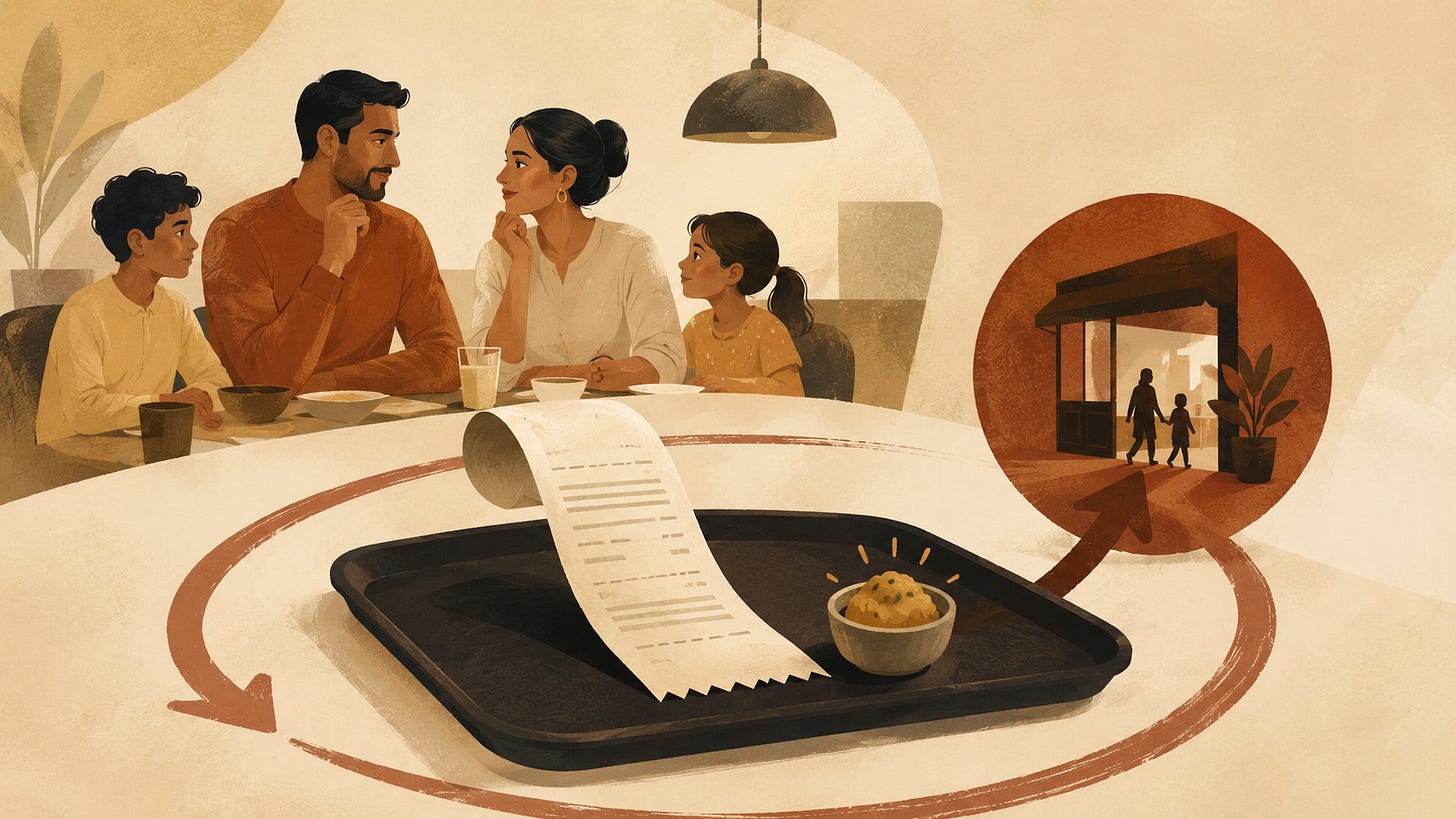
The next-visit path creates a reason to return. This could be a receipt-based lucky number, stamped slip, short-validity perk, saved voucher or other simple return trigger. It protects the first visit from too much theatre, but it must be memorable and easy to redeem. If the customer forgets it, loses it or cannot understand the redemption window, the mechanic becomes leakage.
A good sprint can test both paths in similar stores and make a decision while the campaign is still live. Keep the cleaner performer, not necessarily the flashier one.
Keep the mechanics low-ops
The strongest mechanic is not the one that sounds most exciting in the presentation. It is the one a busy store can run consistently.
For a short-window campaign, low-ops mechanics usually beat clever ones. A cashier button, price-level adjustment, barcode, QR code, stamped receipt or receipt-upload fallback may not sound glamorous, but those paths are closer to the actual purchase moment and easier to audit. They also give the store team fewer ways to accidentally break the campaign.
The mistake is to add a game layer, a registration layer, a prize ladder, a voucher wallet and a terms page before the basic behaviour has been proven. That is how the cashier becomes tech support and the manager becomes the complaints desk.
The useful discipline is to ask one practical question:
What is the lightest mechanic that can create a visible small win, protect margin, be paused during peak periods, and still leave enough data to make a decision?
That pause rule matters. A campaign that cannot be paused is not store-safe. If a mechanic creates too many disputes, slows the line, confuses staff, pushes reward cost above the agreed guardrail or produces weak redemption after a fair initial read, the team should already know what changes.
Make the line and kiosk feel managed
Waiting feels worse when nobody tells you what is happening. The store does not always need to be dramatically faster; it often needs to feel more legible.
Simple cues can do a lot of work:
“Family meal? Kiosk is the fast lane.”
“Average pickup: 2–3 minutes.”
“Order while you wait.”
“Keep your receipt; your next-visit perk may be on it.”
These are not magic words, and they should never fake operational certainty, but they reduce ambiguity at the point where ambiguity is most expensive.
A truthful wait time feels better than silence. A clear pickup shelf feels better than wandering. A kiosk tile that points customers to the family meal faster feels better than a menu maze. These are small interaction details, but they are often where the value message either holds or breaks.
Keep family-facing work adult-facing
If the campaign involves families, the guardrail should be explicit. The work can be warm, useful and family-appropriate, but it should still be adult-facing.
That means speaking to adults, parents, guardians and general audiences; keeping opt-ins adult-led; avoiding child-pressure copy; not making the child the buyer; not collecting children’s data; and not making redemption depend on a minor initiating the action.
Family-appropriate value is legitimate. Child-directed pressure is not. There is a clear difference between “make dinner easier for the family” and “kids, ask your parents”. That difference should be visible in the media targeting, the creative, the redemption flow and the store script.
This is not only a compliance point. It also makes the strategy stronger because it keeps the work focused on the actual purchase decision-maker.
Agree the scorecard before launch
The scorecard should be agreed before the first poster is printed. Otherwise the campaign becomes a post-rationalisation exercise where every team can find a number that supports its preferred story.
For a short sprint, the measurement spine can stay simple: family-meal transactions, repeat within a short window, reward claims and redemptions, cost per incremental visit, attach rate, complaint or confusion rate, and matched control stores where possible.
A better dashboard separates three views. The executive view asks whether the campaign created incremental commercial movement. The operations view asks whether it helped or hurt the store. The marketing view asks which channel, message and mechanic created useful demand.
The useful definition of done includes both commercial and operational signals: more family-meal transactions versus baseline or matched control, a visible lift in repeat behaviour within the chosen return window, reward cost inside the agreed guardrail, stable or improved attach rate, low staff confusion, low dispute volume, neutral or positive customer sentiment, and a clear recommendation to scale, change or stop.
The point is not to predict the perfect result. The point is to decide what evidence will be good enough to support the next decision.
Cleaner beats louder
Cleaner is an underrated campaign metric. The winning mechanic is not always the one with the highest claim rate or the most visible customer participation.
The cleaner mechanic is the one with the best blended read:
strong enough uptake;
acceptable cost;
low staff confusion;
low dispute rate;
minimal waiting-area drag;
clear customer understanding;
clean redemption data;
useful signal on repeat behaviour.
This matters because campaigns often optimise for the wrong visible number. A mechanic can generate plenty of claims and still damage the visit. Another can produce fewer visible moments and still create better repeat behaviour.
The job is not to maximise noise. It is to create store-safe behaviour change.
Different stores need different cues
One national poster rarely fits every store context. The core offer can stay consistent, but the cue should adapt to the environment.
A mall store may need certainty, pickup clarity and speed confidence because the customer is juggling time, parking and competing food options. A drive-thru-heavy store needs the offer to be understood before the order point, without adding anything that blocks the lane. A commuter store needs low-copy signage that can be decoded quickly. A school-zone store needs adult-facing family language and extra discipline around compliance. A weekend hub may benefit from short-validity perks that seed the next visit.
This is not personalisation theatre. It is operational respect.
The pre-launch test
Before running a family-value campaign, test it with six questions:
Can a cashier explain the mechanic in under six words?
Can the store redeem it without calling head office?
Can the manager pause it during a rush?
Does it create a reason to return, or does all the value disappear in the first transaction?
Can pilot stores be compared with similar non-exposed stores?
Does the family framing speak to adults clearly enough that there is no ambiguity?
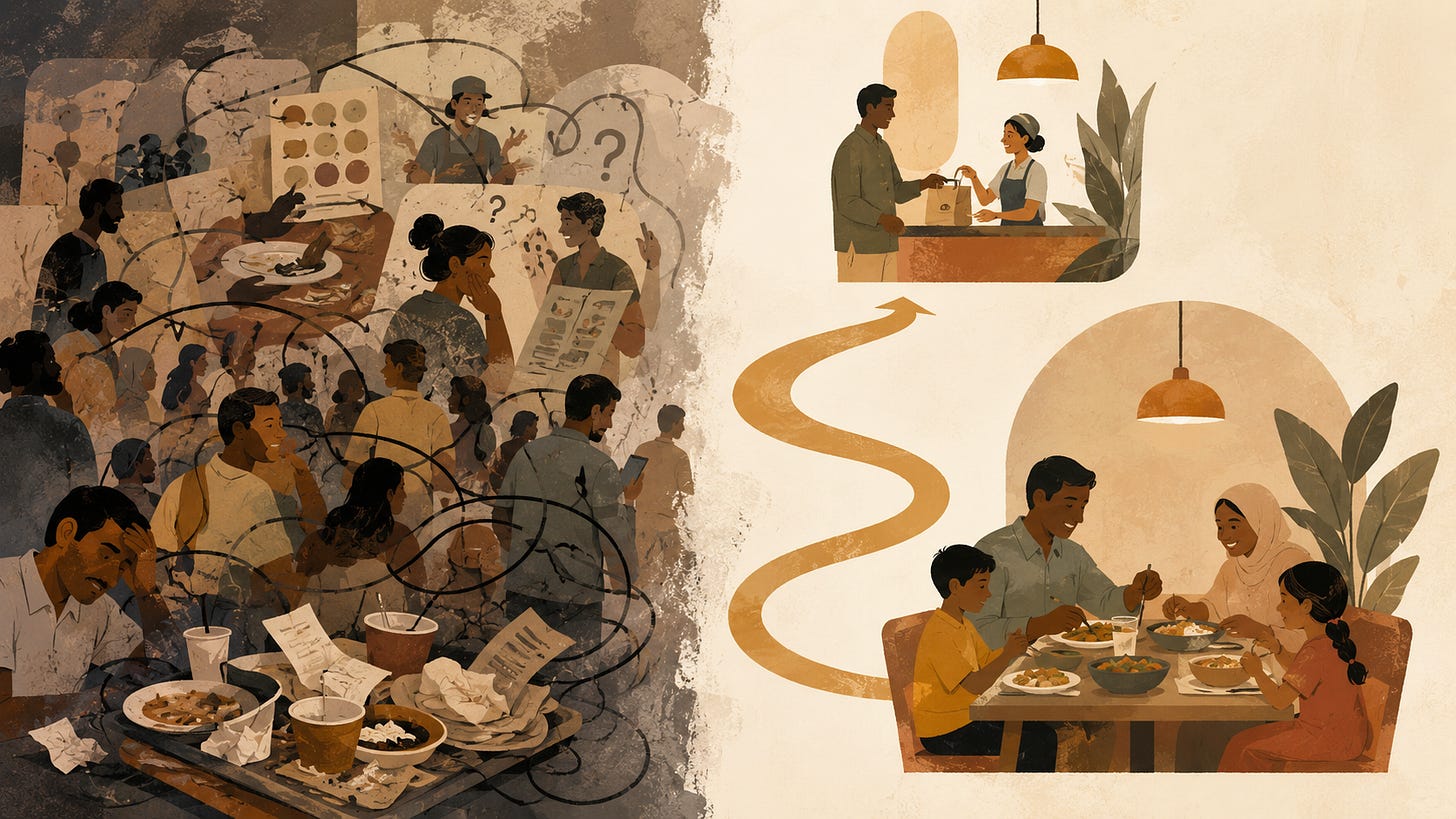
If the answer to any of those questions is weak, the campaign is not ready. The fix may be creative, operational, legal, analytical or all of the above. Either way, it is cheaper to find the weakness before the posters are printed.
Start with the visit, not the poster
A lot of marketing work dies because it is designed for approval rather than use. It looks good in a PDF, sounds smart in a meeting, and contains enough behavioural language to feel strategic. Then it reaches the store and the friction appears.
The cashier is unsure how to explain it. The manager is annoyed because the rush is harder to control. The customer cannot tell what to do. The reward creates disputes. The report arrives too late to change anything. By then, the campaign has technically launched, but the store has absorbed the cost of the complexity.
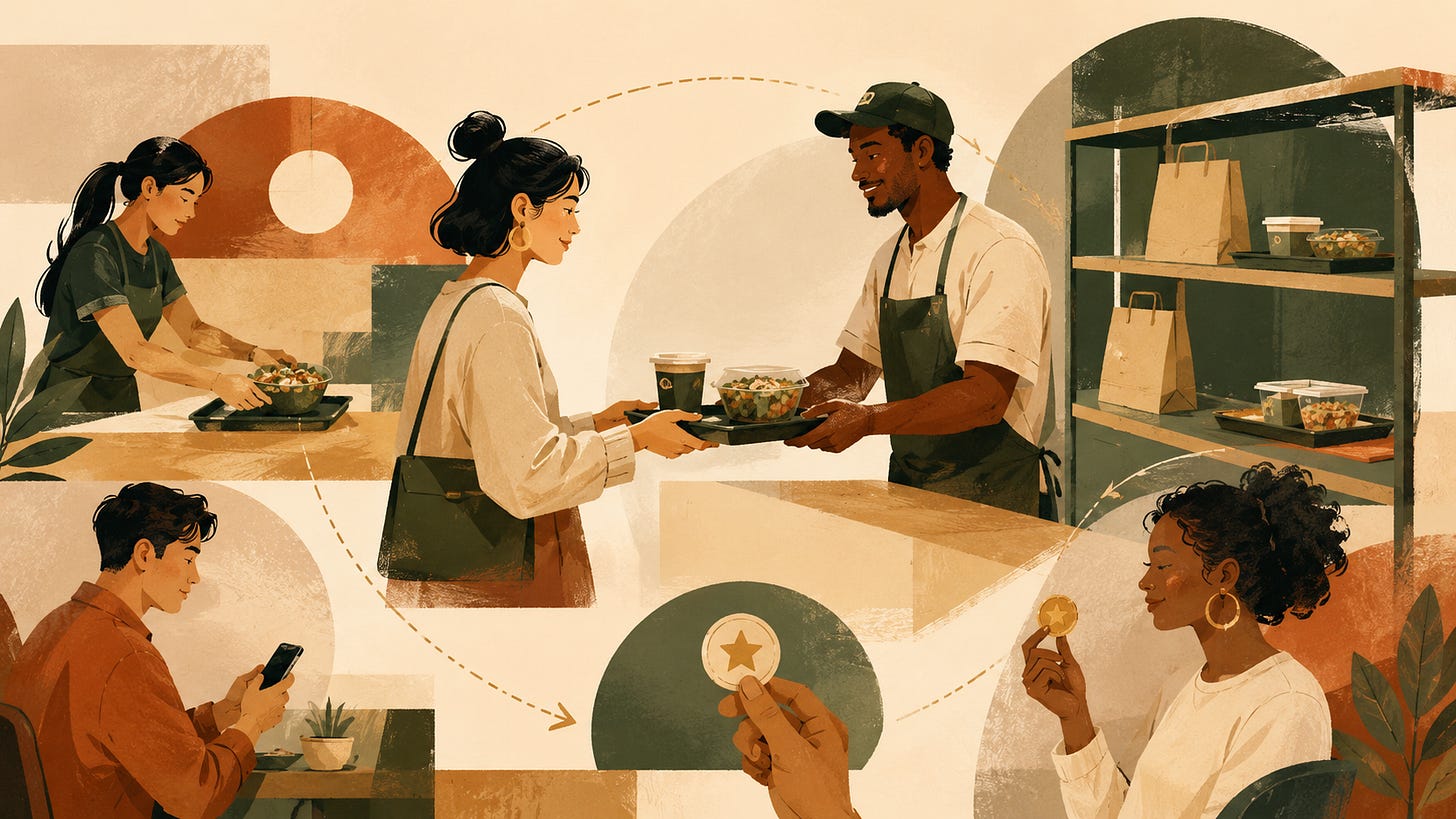
Family value is not just a message. It is a service moment with a price tag attached.
The next time a team says it needs a family-value campaign, the better starting point is not the headline. It is the visit.
Where does the customer hesitate? Where does the wait feel longer than it is? Where does choice become work? Where could a small win create a second visit? Where could the store team run the mechanic without resenting it? Where could measurement make the next decision clearer rather than simply decorating the report?
That is where the campaign lives: not in the poster, but in the handoff between promise and experience.
A discount can create attention. A managed visit can create trust, repeat behaviour and a cleaner commercial read.
That is the real opportunity in family value.


No published comments yet.