
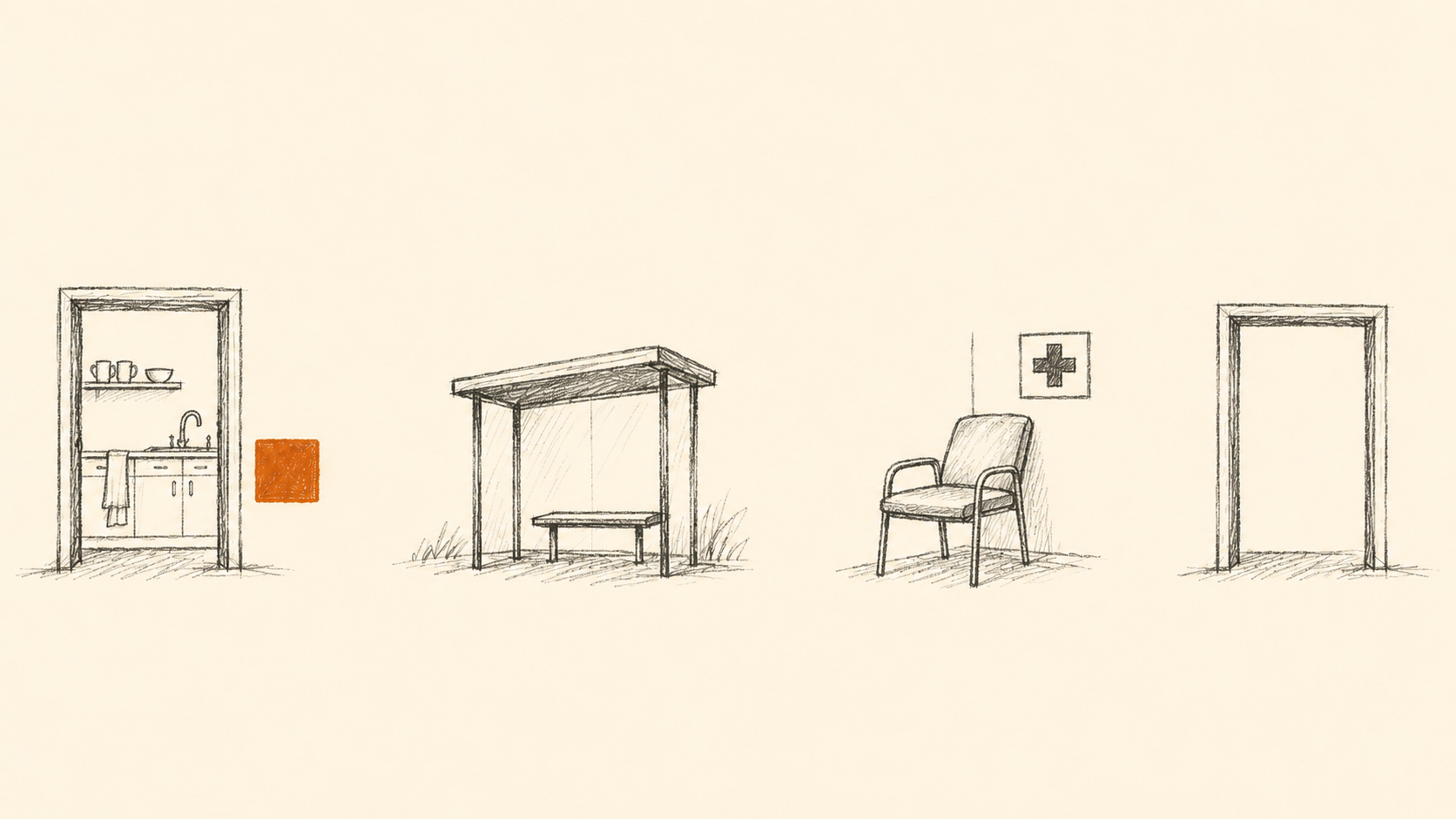
On Monday, Nessa drew a map of the day in pencil.
The map had four places: the kitchen, the bus stop, the clinic waiting room and home again. She left the spaces between them blank. In the past, she would have filled those spaces with errands. She would have added a shop, a call, a walk past the river. She used to believe an empty hour was an hour that had not been used properly.
Now the blank parts were where she kept the day possible.
Her condition did not arrive with a clear beginning. It made some mornings difficult to predict and some afternoons too long. Nessa had learnt the names of forms and waiting lists. She had learnt which friend could listen without trying to improve the story. She was still learning how to say, “I can come for half an hour,” without apologising for the limit.
At the clinic, a woman in a red scarf asked if Nessa was next. Nessa said she thought so. They compared appointment times, then stopped. There was no prize for being the most patient person in the room. The television showed a cooking programme with the sound turned off. Someone had left a paper cup on the windowsill. The room continued without needing a lesson from them.
When Nessa got home, her neighbour had put a parcel inside the doorway. It was a small thing, a book Nessa had ordered months earlier and forgotten. She carried it to the sofa, then rested. The map remained on the table, its pencil lines plain and incomplete.
Her brother called at six. He asked how she was, and she considered the different answers available. “I went to the clinic,” she said. “I made it home. I don't know what tomorrow will be like.”
He waited for a moment. “Do you want me to bring supper?”
Nessa looked at the map. There was no place marked for a visitor. She drew a small square beside the kitchen and wrote his name in it.
“Yes,” she said. “But don't bring the thing with the peppers.”
He laughed. “I remember.”
The call did not make the illness smaller. It did not solve the next morning or explain the paperwork. It made one practical space in the day where another person could arrive without being asked to take over.
Nessa used to think that accepting help meant surrendering the plan. Her brother had once arrived with groceries she had not asked for and stayed long enough to rearrange the fridge. He had meant well. She had spent the evening finding her own things. This time she had named the food, the hour and the limit. He had listened. That did not make either of them perfect at care; it gave them a version they could try again.
When he came, he brought rice and a container of lentils. He left them on the counter and sat at the far end of the sofa. Nessa opened the book. The first page carried a dedication to someone she did not know. She read it twice, then rested her eyes.
Her brother asked if she wanted the curtains closed. Nessa said not yet. He asked if she wanted to talk about the appointment. She said no, not tonight. He nodded and told her about a dog he had seen wearing a yellow raincoat. When he left, the food stayed where she could reach it.
Loading published comments…