

An unfinished sentence can wait. A digital workspace can save the page and reopen it where you left off, so closing need not mean starting over. But an interface can keep the work available and still present another alert, recommendation or next action. A save signal is not an ending. What would it take for a tool to let you stop and return without rebuilding your place?
The question came into focus in an exchange with Emma Valahu about analogue work. She described the tactile quality of making something and the shutter sound a digital camera can use to evoke a familiar action. In my reply, I wondered whether the analogy might also point to an edge: a page ends, notifications stop, and the work stays put. The design question is what digital products can borrow from that boundary without asking someone to abandon the work.
A notebook gives its boundaries through physical form: a page runs out; a cover shuts. The screen’s frame tells you nothing about whether this session is over. A product can make three states clear: work saved, session ended, place to resume. A save indicator reports the first state; a closing action lets the person choose the second; a reliable return point supports the third.
There is a small design absurdity in being told the work is saved while the interface keeps offering something else to do.

A boundary the person controls
A timer can cut someone off mid-task; a forced pause or a warning that makes leaving feel costly may add friction without giving the work a better place to wait. A useful boundary leaves the choice with the person: they can finish a chosen section, see that it is saved and where it will reopen, then quiet ordinary prompts until they decide to return. The closing state should make those facts clear without asking for another confirmation after the person has chosen to leave.
Take the unfinished sentence: its writer chooses to stop, sees that it is saved, and later returns to the same point. A reading app might mark the end of a chosen section; a notification control could quiet one space until the person turns it back on.
A prototype can show whether the product behaves as designed: does it reopen at the same point, and make any open obligation visible? People using it would still need to say whether the boundary suits their work.
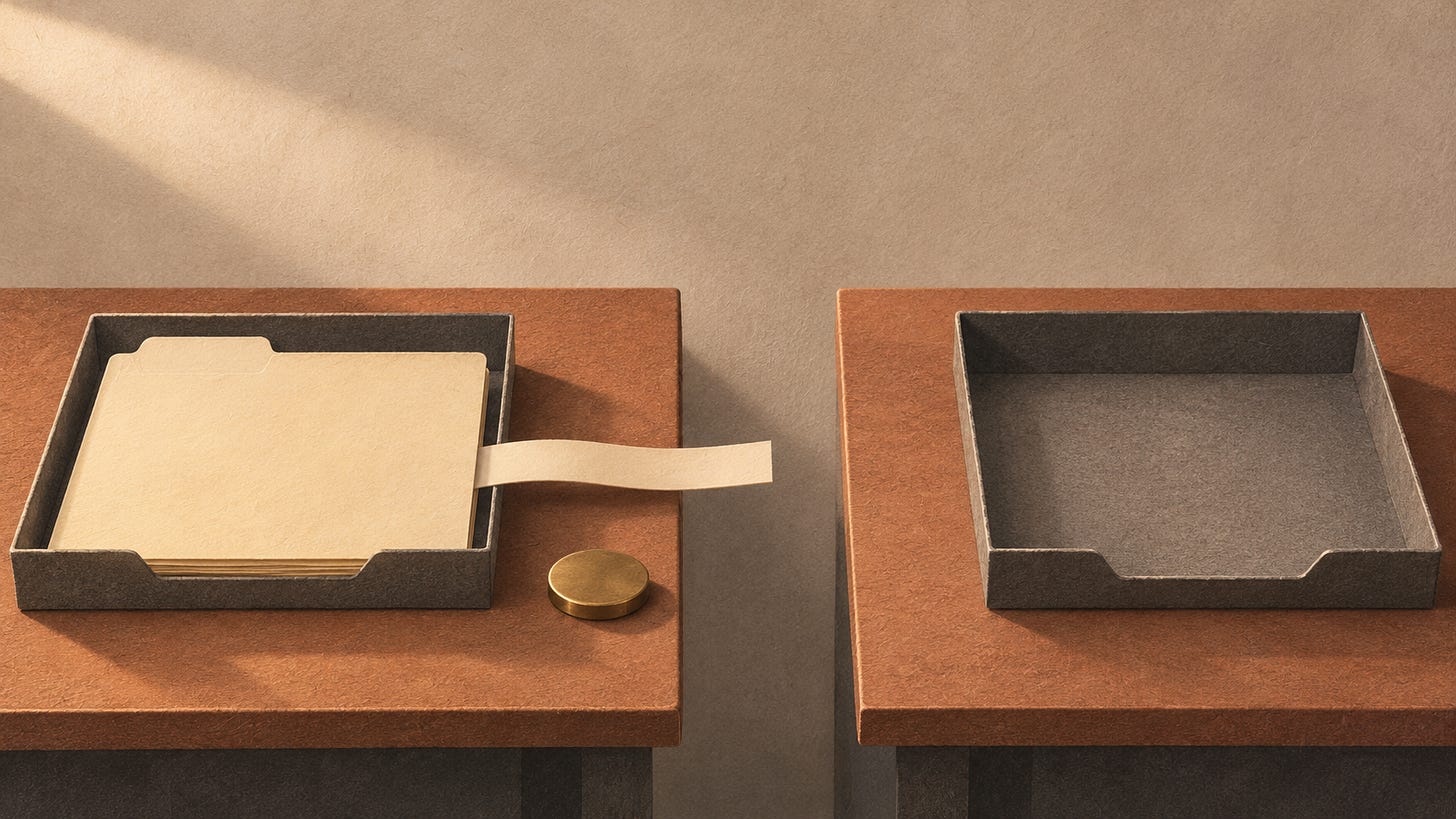
When saved work is not a handover
Some work is shared or time-sensitive. Suppose the sentence is part of a shared draft and a colleague is expected to pick up the work. The saved document does not show that its author meant it as a handover. Quieting an interface cannot make that obligation disappear. A product can make visible what remains open, who is expected to act and whether the colleague has accepted the handover; it should not infer agreement or completion from the presence of a file.
Analogue tools have limits too. Paper does not preserve every revision, and a notebook cannot tell a colleague that a handover is ready. Their physical edges still offer one useful quality to borrow: a bounded session and a reliable place for unfinished work.
A camera’s shutter sound can signal that an action has happened. A digital workspace could offer a different cue: the work is saved; this session has ended; here is where to return. The work stays where you left it. You can leave.



Loading published comments…