
Mixed Media
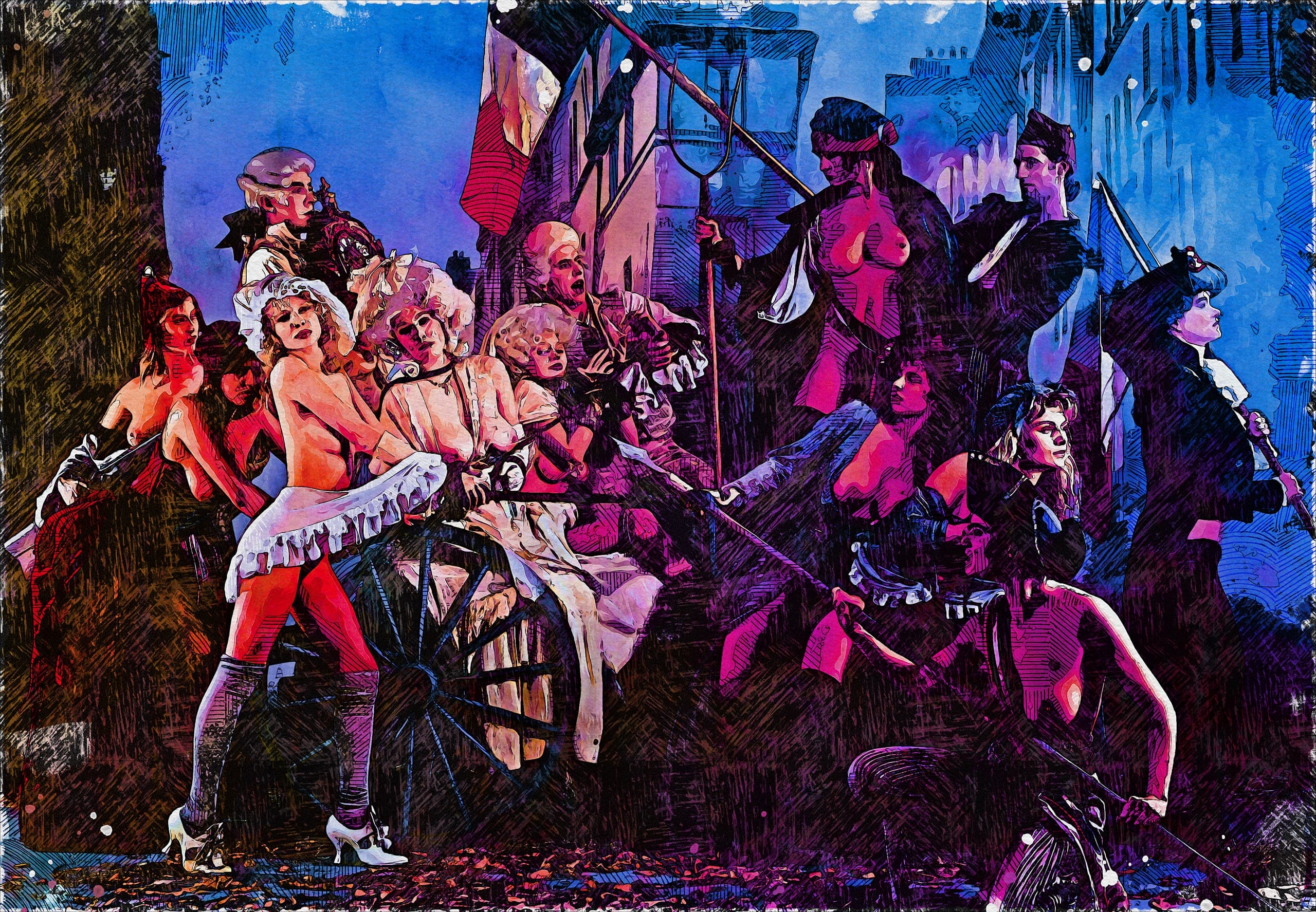
French Revolution No. 3
A surreal and vibrant painting depicting a group of people in extravagant 18th-century attire gathered around a lavish carriage. The scene evokes themes of decadence, upheaval, and the collision between opulence and revolution.
- Category
- Mixed Media
- Tags
Series
French Revolution series
11 related artwork posts in this concept.
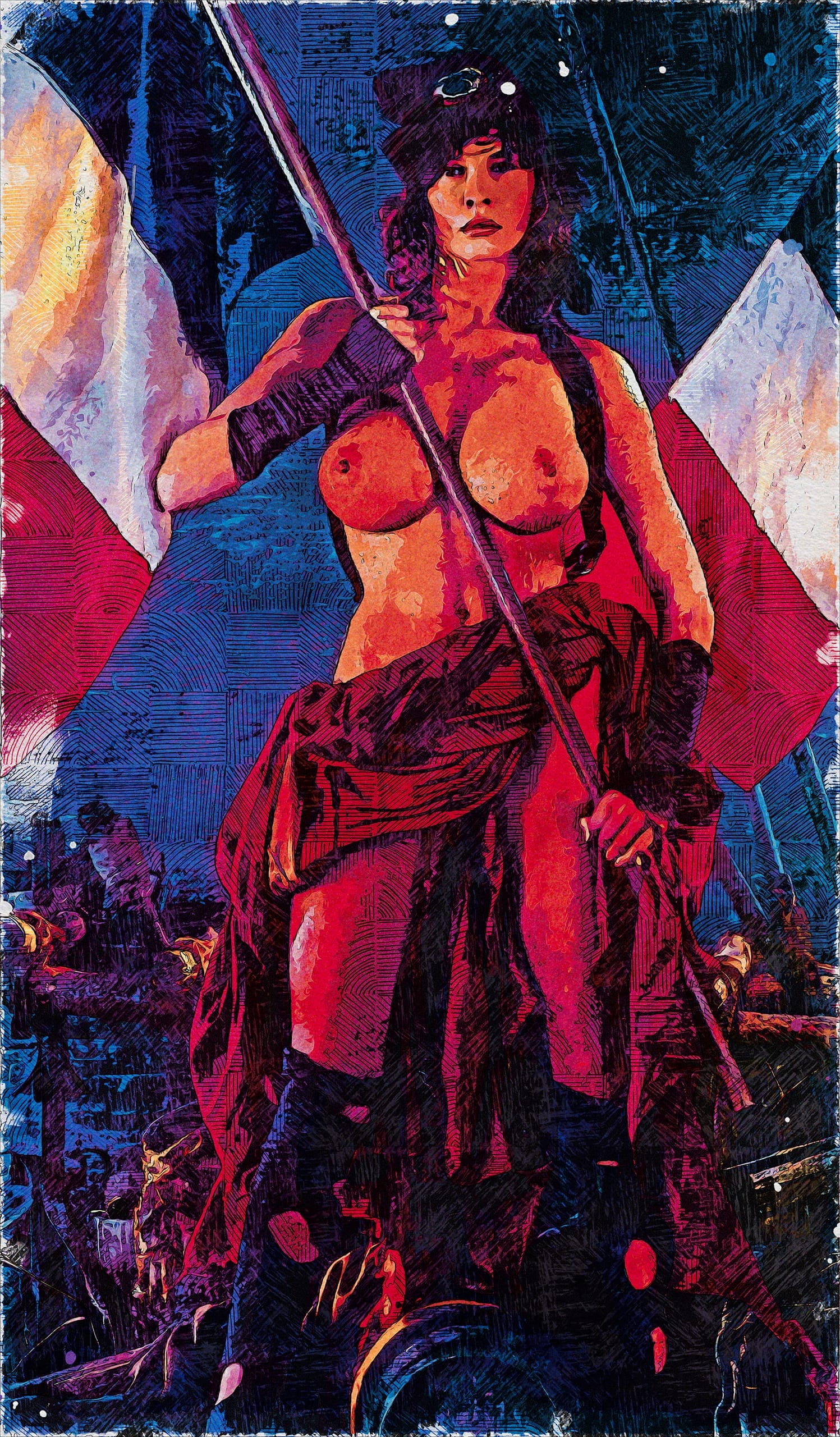
French Revolution No. 1
A bold portrayal of a woman with a bare chest holding a flag, set against the dramatic backdrop of the French Revolution. The intense reds and deep blues evoke themes of courage, upheaval, and the passionate struggle for liberation.
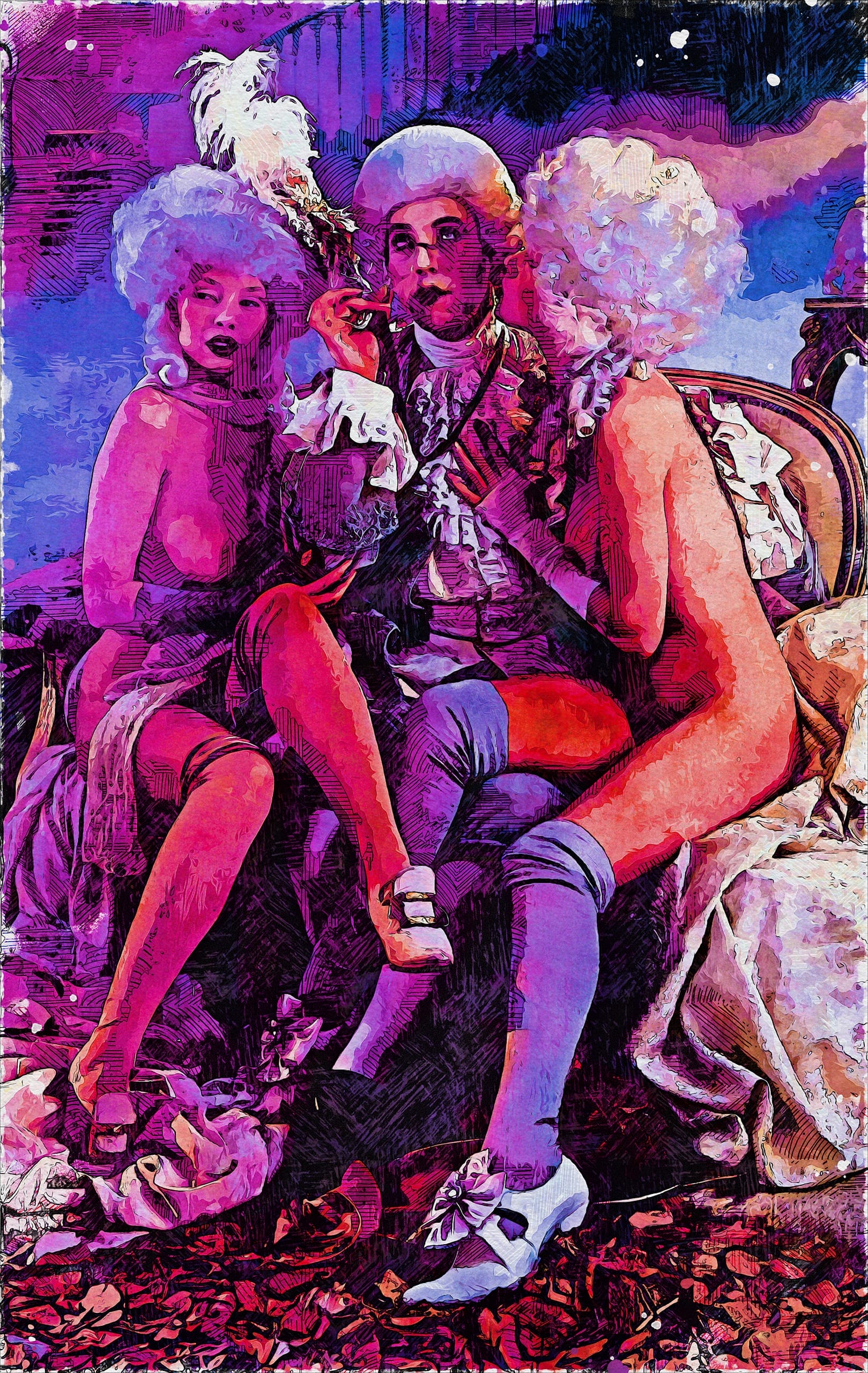
French Revolution No. 2
A vibrant depiction of two figures in elaborate 18th-century attire, set against a backdrop of vivid purples and blues. The artwork evokes themes of decadence, rebellion, and the contrast between opulent court life and revolutionary upheaval.
French Revolution No. 3
A surreal and vibrant painting depicting a group of people in extravagant 18th-century attire gathered around a lavish carriage. The scene evokes themes of decadence, upheaval, and the collision between opulence and revolution.
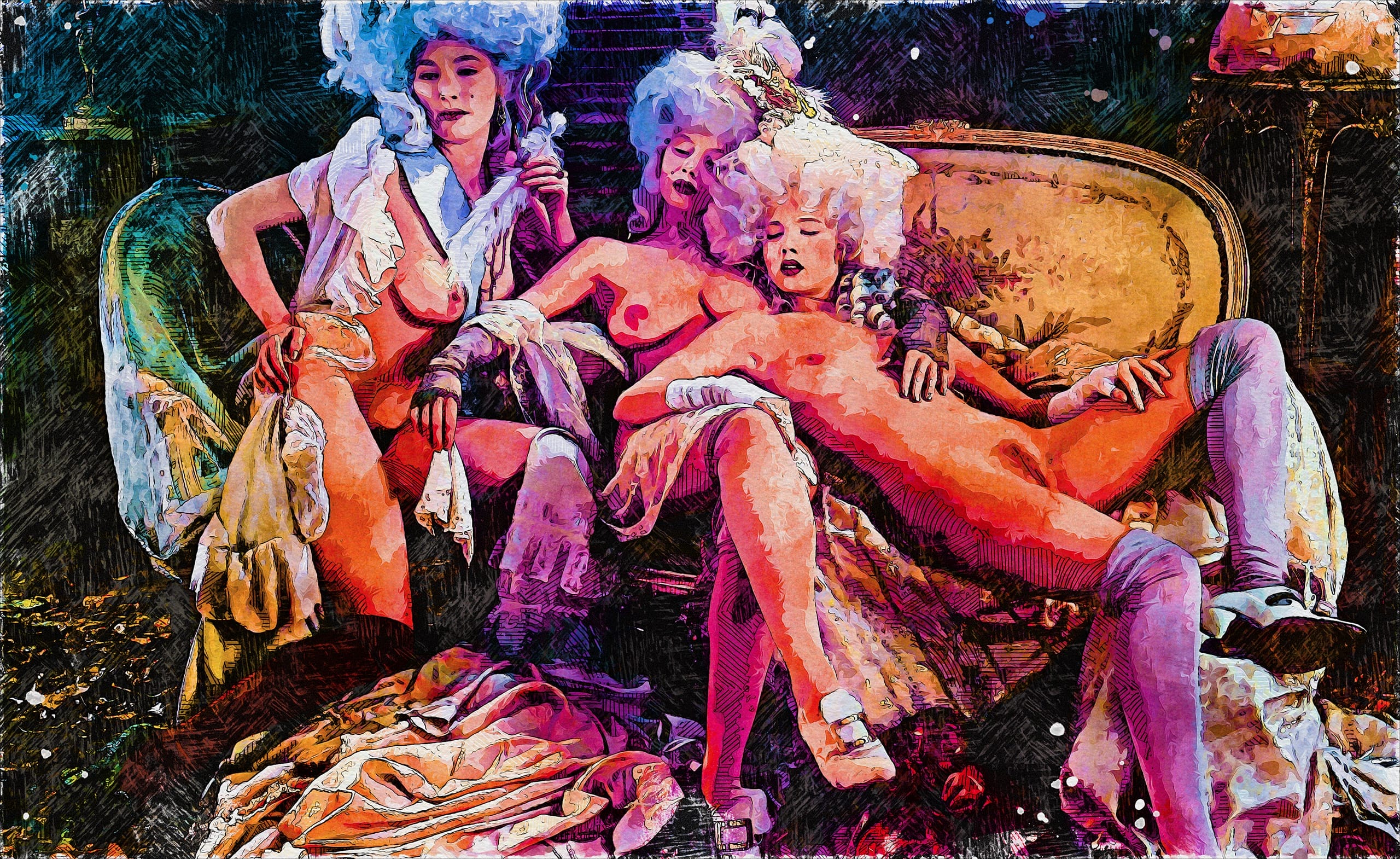
French Revolution No. 4
A vibrant portrayal of three figures in 18th-century attire reclining on a vintage sofa in an opulent setting. The rich colors and detailed textiles evoke themes of decadence, power, and the fragility of aristocratic indulgence amidst revolutionary change.
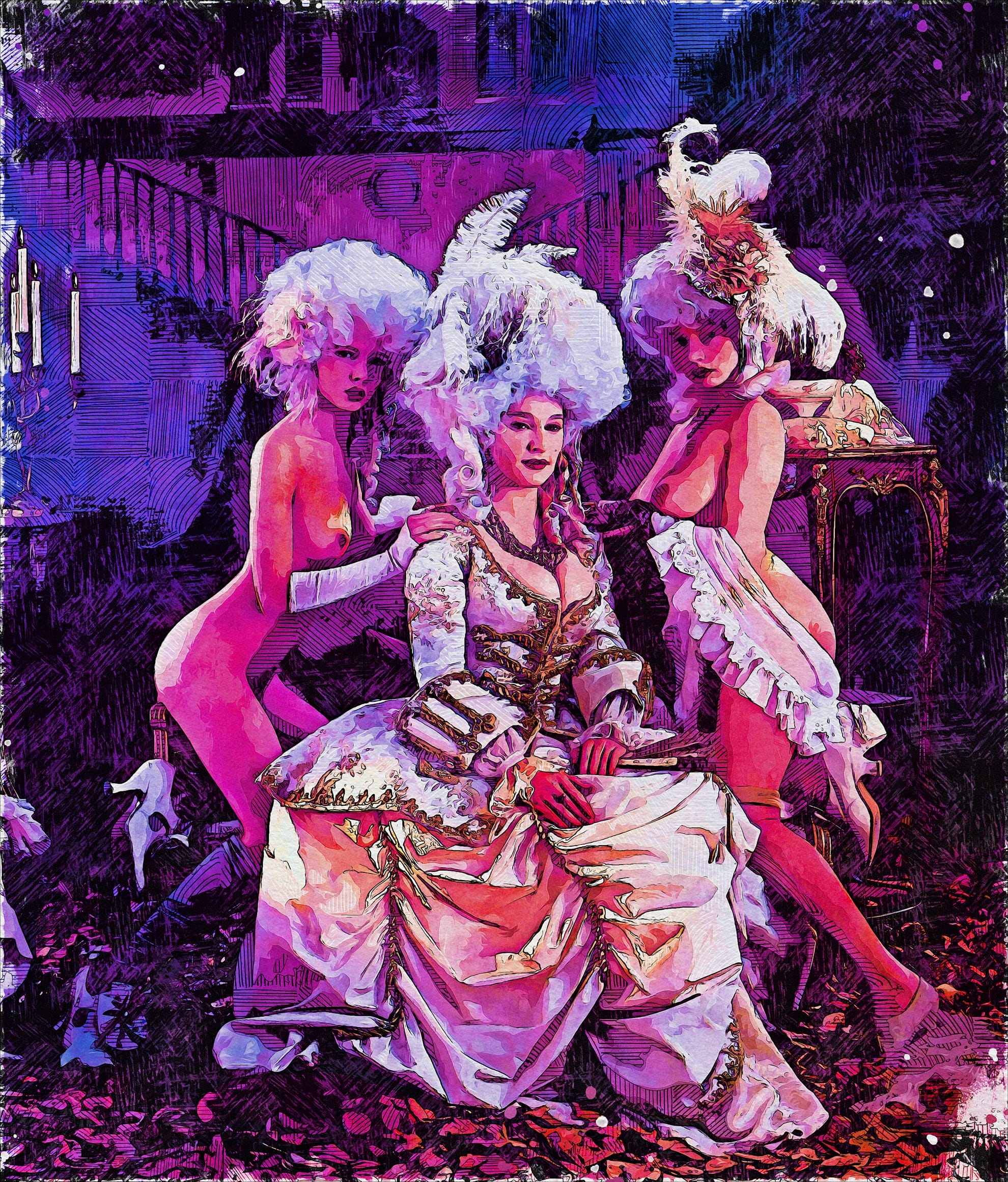
French Revolution No. 5
A baroque-inspired scene depicting a figure in an elaborate white gown flanked by two figures in extravagant wigs. The vibrant purples and pinks of the background, accented by rose petals, evoke themes of decadence and upheaval during the French Revolution.
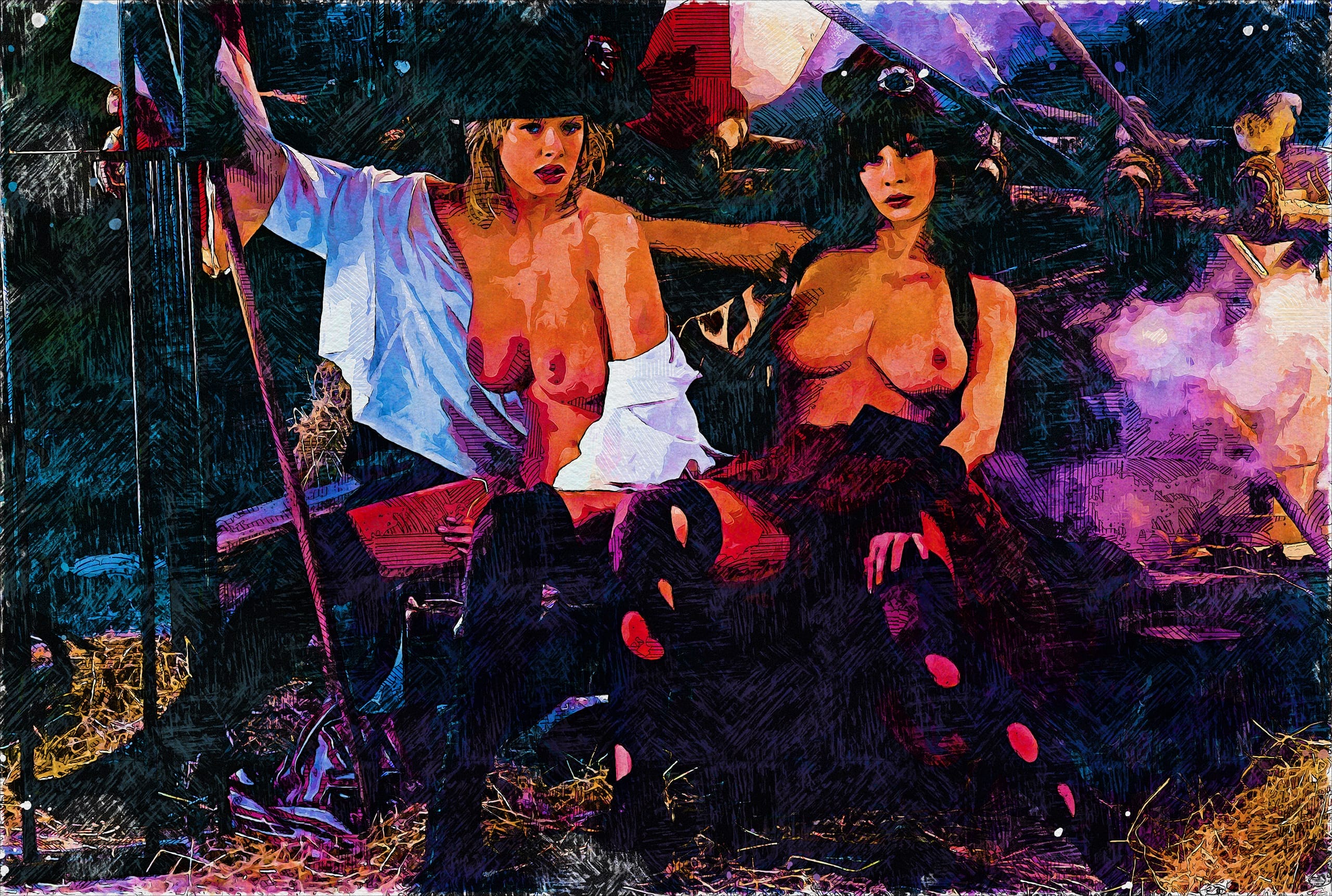
French Revolution No. 6
A dynamic scene of two women dressed as pirates seated amidst a colorful, textured setting. The vibrant blue and purple hues and nautical props evoke themes of rebellion, adventure, and defiance during the French Revolution.
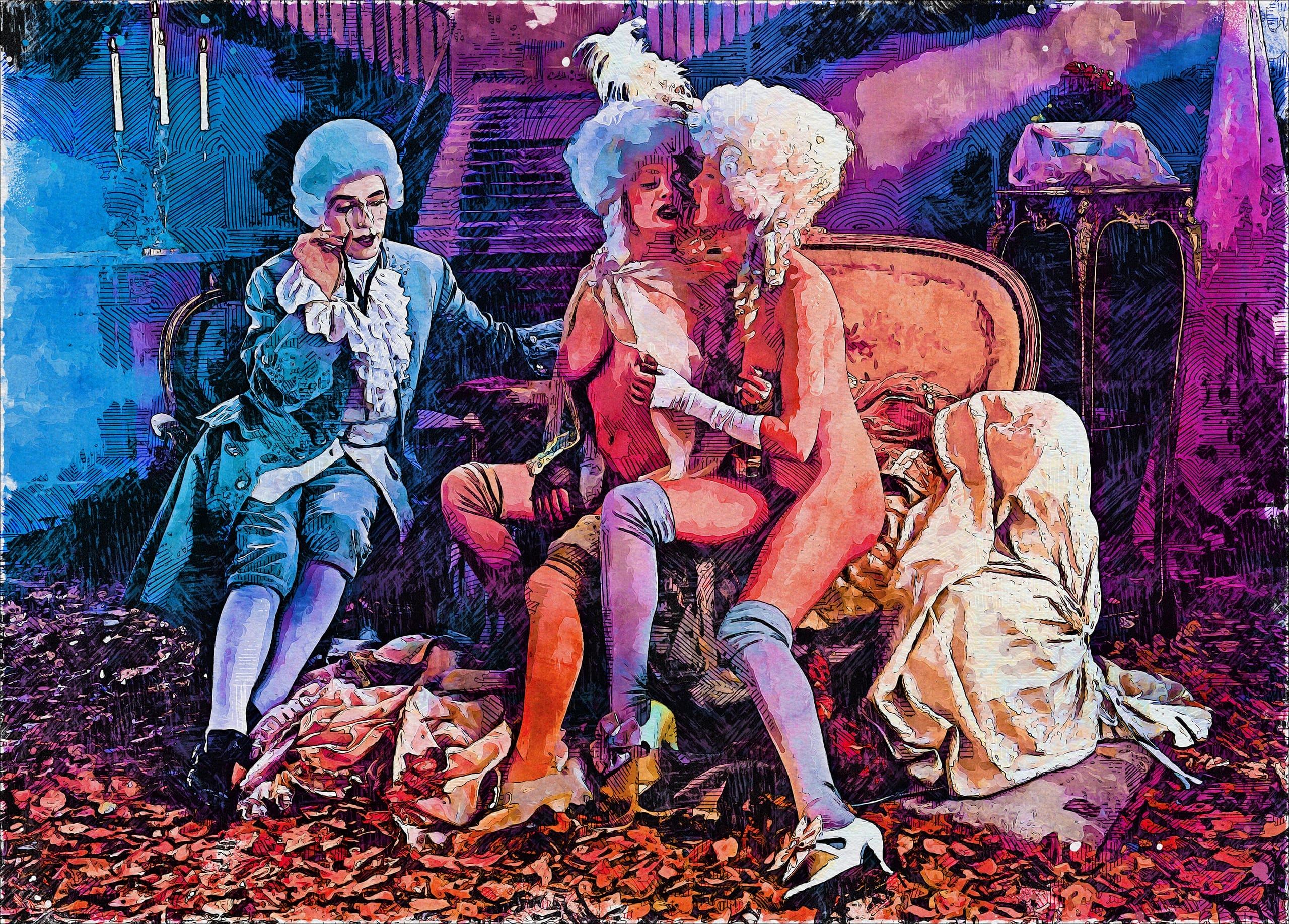
French Revolution No. 7
A surreal scene of three figures in elaborate vintage attire seated on a luxurious couch surrounded by autumn leaves. The warm, colorful lighting and opulent setting evoke themes of decadence and the decline of the French aristocracy.
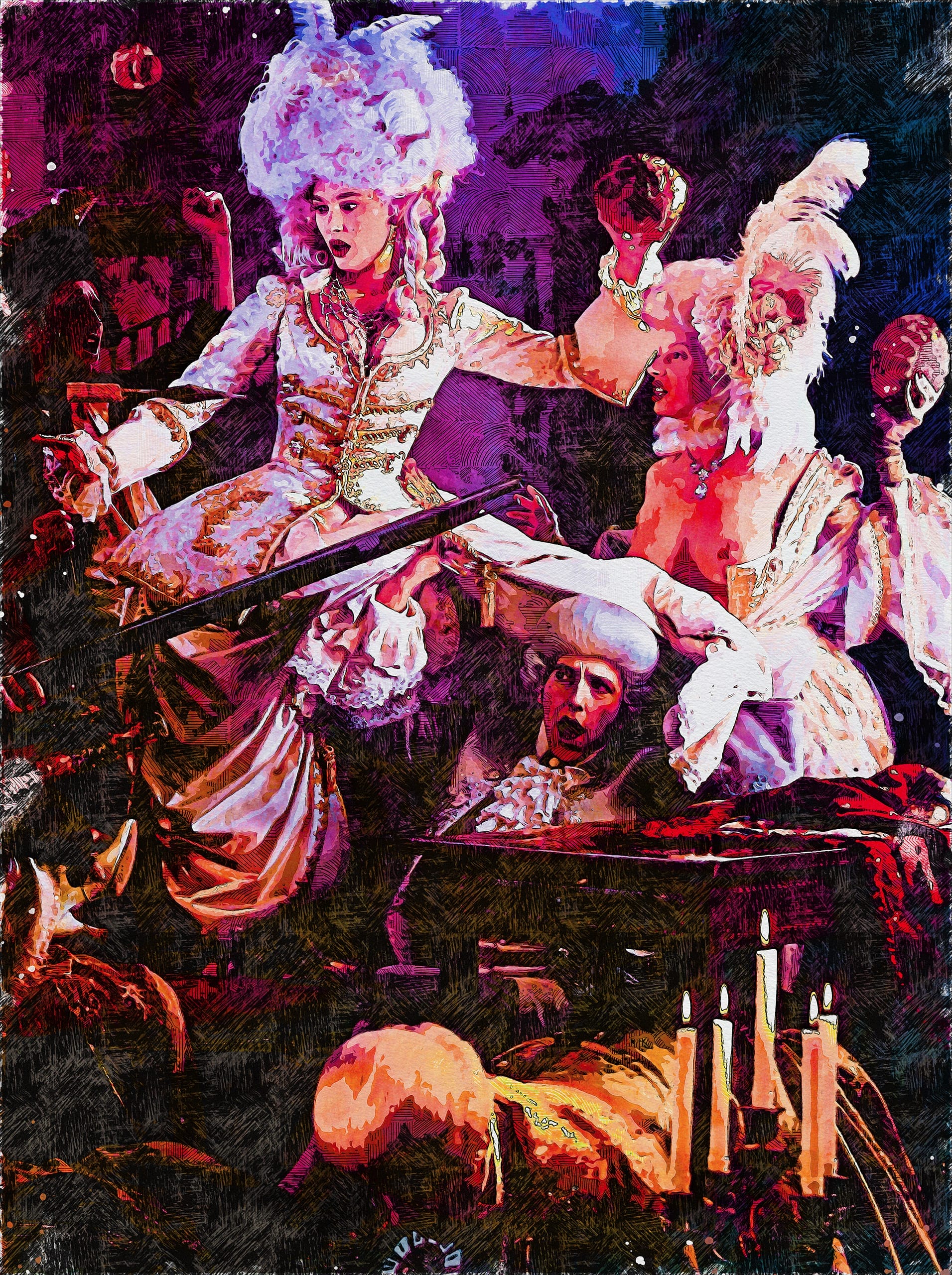
French Revolution No. 8
A vibrant baroque scene of a theatrically dressed woman gesturing dramatically beside another figure raising a glass. Dim lighting and candlelight evoke a sense of decadent revelry and the fleeting grandeur of the French aristocracy during the Revolution.
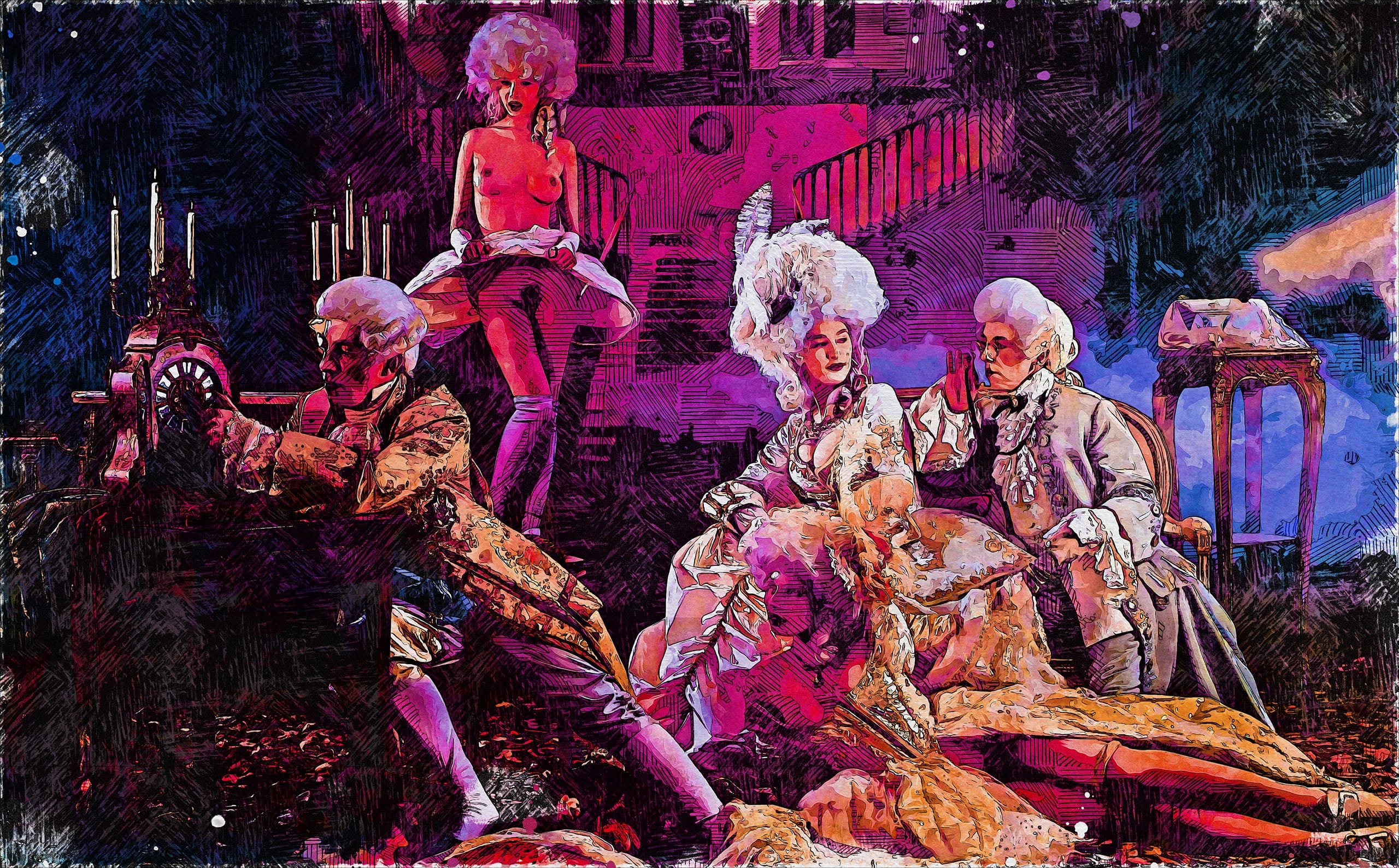
French Revolution No. 9
An elaborate painting depicting three figures in opulent 18th-century attire inside a lavish interior. The scene, filled with powdered wigs, harpsichords, and candelabra, evokes themes of decadence and the fragile balance of power during the French Revolution.
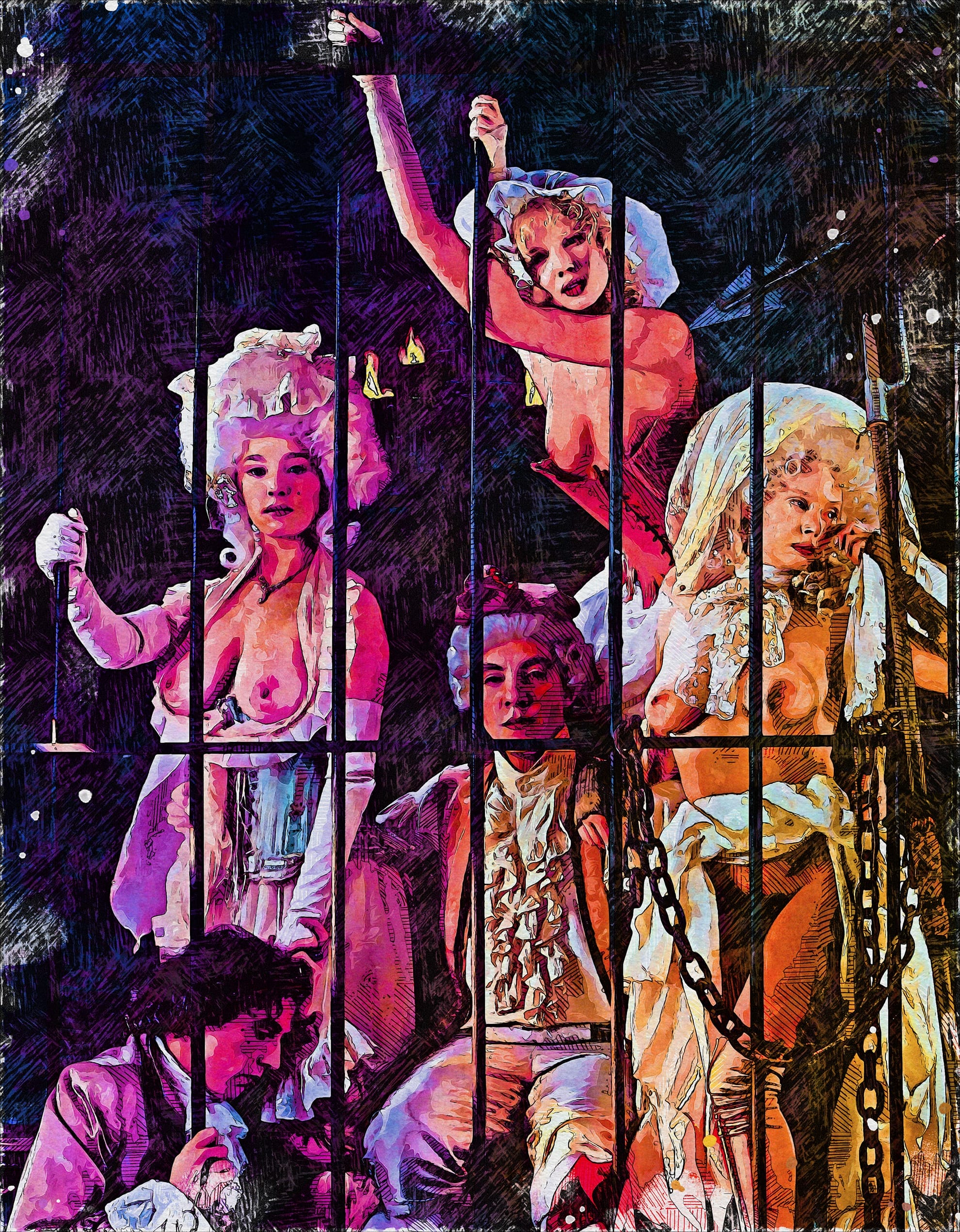
French Revolution No. 10
A striking portrayal of four lavishly dressed individuals standing behind black bars, symbolizing the fall of the French nobility during the Revolution. The detailed costumes and dramatic lighting evoke themes of decadence, downfall, and the transience of power.
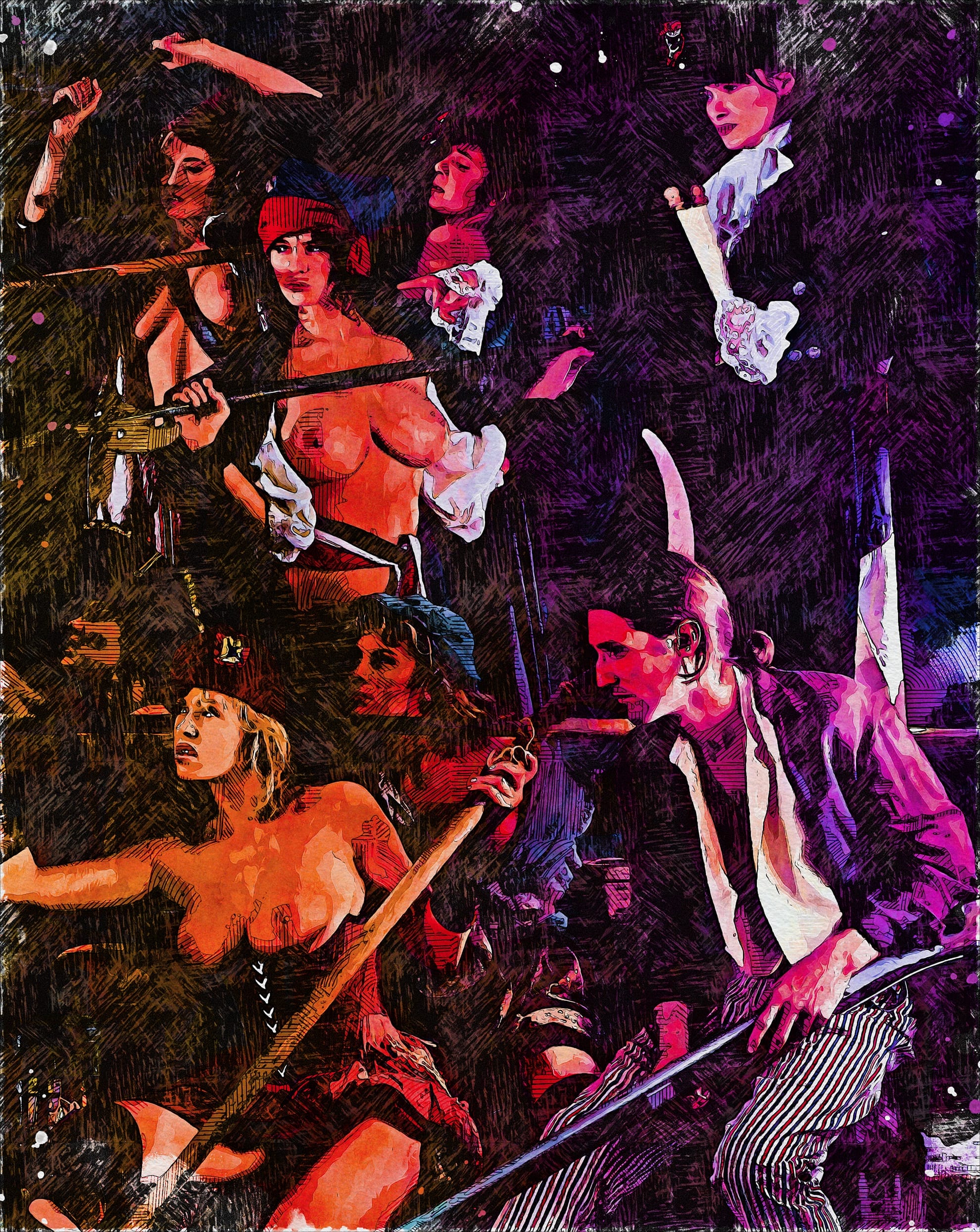
French Revolution No. 11
A dynamic, abstract depiction of a determined group of people holding weapons, set against a dark, textured background. The vibrant reds, purples, and blues evoke themes of revolution, resistance, and the human struggle for freedom.
This vibrant and theatrical artwork portrays a surreal scene where figures in 18th-century attire appear to be caught in a swirl of chaos and transformation. A group of elegantly dressed people gathers around a lavish carriage, their opulent costumes and powdered wigs contrasting sharply with the tension in the atmosphere.
At the forefront, a woman in a white tutu stands prominently, her presence evoking a sense of both performance and uncertainty. The vivid hues and bold brushstrokes create a dynamic interplay between light and shadow, suggesting a dance of destruction and renewal.
The composition captures the essence of the French Revolution, where the grandiosity of the aristocracy collides with the upheaval of revolutionary fervor. There is a palpable sense of disintegration and reformation, as if the very fabric of society is being unraveled and rewoven.
The piece invites the viewer to reflect on themes of decadence, conflict, and the cyclical nature of societal change, embodying both the beauty and fragility of a world on the brink of transformation.
Series notes
Sex and politics made a lethal mixture for Marie and her courtly crowd, which explains the French Revolution which wound down in a violent epidemic of sudden hair loss, of which Marie Antoinette had the biggest hair in France, purchased wholesale from the hunchback in the bell tower of Notre Dame Cathedral. The mob - les citoyens - imprisoned victims, then herded them into overcrowded tumbrels for their rendezvous with the guillotine. Marie pleaded for mercy ('If not for me, for my magnificent breasts'), but in vain - Off With Their Clothes!
This is an alternate take on the French Revolution (July 1789–1792) comparing the French nobility, most notably Marie Antoinette, to the left-wing masses on the streets who brought about the revolution.